


 0
0



First Half Marathon: Nutrition and Fuelling Guide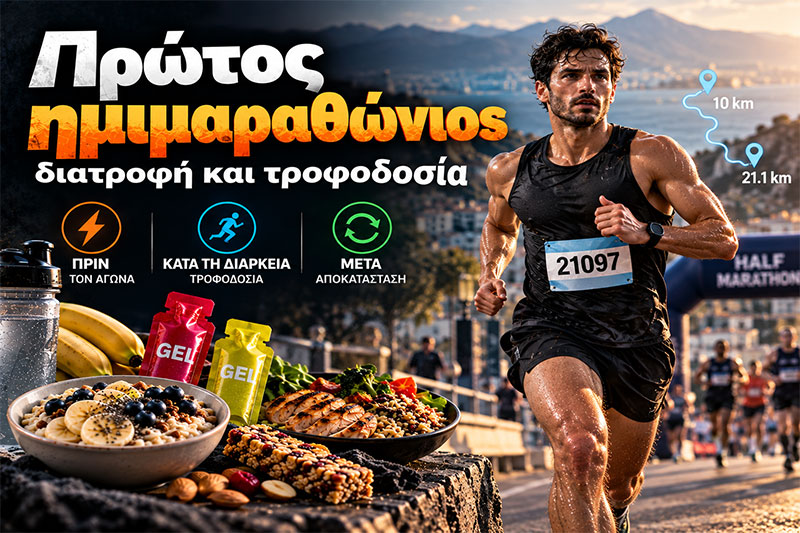 First Half Marathon: How Should You Plan Your Nutrition?Your first half marathon nutrition plan should be personal, practical and tested. Expected finishing time, access to water and digestive tolerance determine how you put it into practice. The literature emphasises balancing fuelling needs against the risk of gastrointestinal discomfort. What should you eat before the start?Pre-race meals should provide carbohydrates to support fuel stores. Adjust the amount to the demands of the event and your tolerance. Bread with jam and a banana is one practical option to test. Record the amount and timing so you know exactly what worked during training. How much carbohydrate do you need during the race?For endurance efforts lasting approximately 1–2.5 hours, general sports nutrition guidelines suggest 30–60 g of carbohydrate per hour. This is a planning range requiring individual adjustment and practice, rather than an obligation to reach the upper limit. If you expect to take longer, your plan needs reassessing accordingly. How does the plan translate into products?Hypothetical example: you have practised consuming 40 g per hour and expect two hours of exercise. The calculation is: 40 g × 2 hours = 80 g of carbohydrate in total. If each gel provides 20 g, 80 g equals four gels mathematically. If you also consume a carbohydrate drink, include it in the calculation. This example does not establish when to take each gel and is not a personal recommendation. What should you test during long runs?Practise your breakfast, chosen products and how you consume them. Fuelling practice may improve tolerance, without guaranteeing that all discomfort will disappear. Also plan where you will carry your gels and how you will open the packets. Frequently asked questionsDoes a gel require water? Should I try a new product on race day? Is carrying enough gels sufficient? References
|

Best supplements store
CHOOSE CATEGORY
CATEGORIES









(c) katerelosfitness.gr - All rights reserved - By: Hyper Center -