


 0


Curcumin and Exercise: Muscle Soreness, Recovery and Performance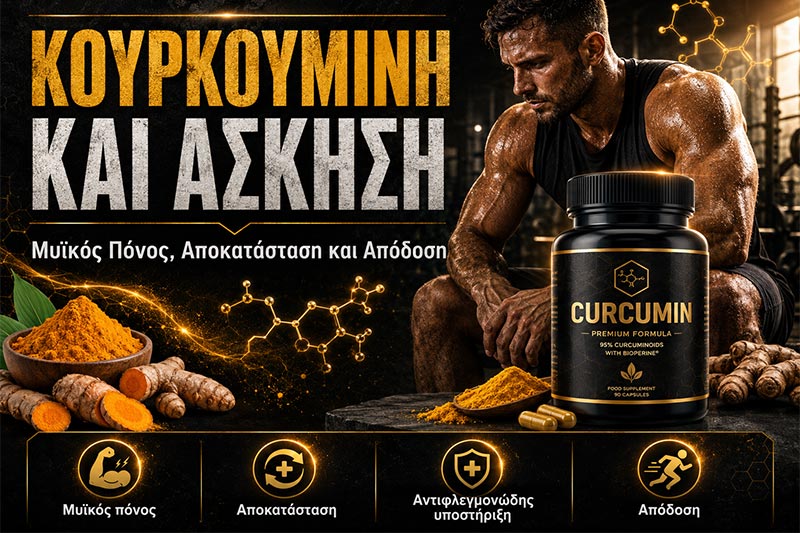 Curcumin is one of the major bioactive compounds found in turmeric (Curcuma longa). Sports research has focused primarily on its possible effects on delayed-onset muscle soreness (DOMS), exercise-induced muscle damage, oxidative stress and recovery from strenuous exercise. The most recent systematic review, published in June 2026, included 15 randomized double-blind placebo-controlled trials involving active individuals and athletes. Favorable findings were reported for several recovery outcomes, although the overall certainty of evidence remained low or very low for many endpoints. Curcumin fits within the broader context of Sports Nutrition and Athlete Health. Both sections are currently accessible on the site. Curcumin and DOMSDelayed-onset muscle soreness commonly develops following unfamiliar or demanding exercise, particularly exercise involving substantial eccentric loading. Controlled human trials suggest curcumin can reduce perceived soreness after muscle-damaging exercise. One randomized crossover study reported lower DOMS and some evidence of improved recovery of muscle function following oral curcumin. Another controlled trial found lower muscle soreness and lower creatine-kinase responses compared with placebo. A 2024 meta-analysis similarly concluded that curcumin can reduce selected markers of muscle damage and soreness, although outcomes depend considerably on dose, timing and formulation. Curcumin and Creatine KinaseCreatine kinase (CK) is frequently used as an indirect marker of exercise-induced muscle damage. Several trials and meta-analyses have reported smaller post-exercise CK responses following curcumin supplementation. However, reducing CK does not necessarily mean that athletic performance will improve. Biomarkers and actual functional recovery should be evaluated separately. Recovery of Muscle FunctionSome trials suggest curcumin may attenuate the temporary decline in muscle function following eccentric exercise. A study combining curcumin with piperine found a smaller reduction in sprint mean power 24 hours after muscle-damaging exercise compared with placebo, although many other recovery outcomes were unaffected. Curcumin therefore appears more relevant to recovery support than to directly increasing maximal strength. Evidence From SoccerCurcumin has also been tested in real sporting contexts rather than only laboratory muscle-damage protocols. Research in professional male soccer players reported lower DOMS at selected post-match time points following curcumin supplementation. However, a 2024 double-blind crossover trial in collegiate soccer players using 180 mg/day found no acceleration in recovery from match-induced muscle damage compared with placebo. Results therefore remain inconsistent even within the same sport. Does Timing Matter?Possibly. A randomized human study compared curcumin consumed before versus after eccentric exercise. Post-exercise ingestion produced a more favorable reduction in muscle soreness, whereas pre-exercise intake did not show the same effect. Changes in CK and maximal voluntary torque were not significantly different across all conditions. This suggests that post-exercise use may be more relevant to soreness, but there is not yet a universally established timing strategy. Curcumin and InflammationExercise-induced inflammation is part of normal recovery and adaptation. Curcumin has been investigated for effects on inflammatory biomarkers such as IL-6, TNF-α and CRP, but findings are inconsistent. The 2026 systematic review found favorable inflammatory effects in only 3 of 8 studies assessing inflammation. Curcumin should therefore not simply be described as completely “blocking exercise inflammation.” Oxidative StressEvidence is somewhat more favorable for oxidative-stress responses. The 2026 systematic review reported beneficial findings in 6 of 7 studies examining oxidative stress. Nevertheless, the certainty of this evidence was rated low because trials were generally small and heterogeneous. This is a promising signal rather than proof that every athlete requires antioxidant supplementation. Does Curcumin Directly Improve Athletic Performance?Evidence is considerably less convincing. The latest systematic review found favorable physical or athletic performance outcomes in 4 of 8 studies, while the certainty of evidence for performance was rated very low. Curcumin should therefore not currently be presented as a direct performance enhancer. Its potential value is more plausibly related to recovery between demanding exercise sessions. When Might Curcumin Be Most Relevant?Current evidence suggests the greatest potential relevance following:
The aim would be to support recovery rather than directly increase acute energy production or maximal force. Turmeric vs CurcuminTurmeric and curcumin are not identical. Turmeric refers to material derived from Curcuma longa, whereas curcumin is a specific curcuminoid contained within it. Exercise trials have used numerous formulations, including plain curcumin, curcuminoid mixtures, high-bioavailability preparations and curcumin combined with absorption enhancers. Pharmacokinetic research demonstrates very large differences in systemic absorption among formulations. Why Bioavailability MattersConventional unformulated curcumin has relatively limited systemic bioavailability. Researchers have therefore used many strategies to increase absorption. A review of human curcumin trials identified at least 25 different bioavailability-enhancing approaches, including piperine, phospholipid complexes and colloidal formulations. This means that comparing two studies purely by the number of milligrams consumed can be misleading. Doses Used in ResearchExercise studies have used a very broad range of curcumin doses, from approximately 90 mg to several grams per day, depending heavily on formulation and bioavailability. A 2025 randomized controlled trial, for example, investigated 750 mg and 1,500 mg/day of hydrolyzed curcumin following exercise-induced muscle damage. There is therefore no single established universal sports dose of curcumin. What Does the Latest 2026 Review Conclude?The systematic review by Lloret-Gil and colleagues, published on June 19, 2026, specifically included randomized, double-blind placebo-controlled trials in active individuals and athletes. Among the 15 included trials, favorable effects were reported in:
The authors concluded that curcumin may support selected aspects of exercise recovery, but the small and heterogeneous evidence base does not yet justify strong practical recommendations for trained and elite athletes. ConclusionCurcumin is one of the more interesting plant-derived compounds investigated for muscle soreness and recovery following strenuous exercise. The most consistent positive findings involve reductions in DOMS and selected markers of muscle damage, while oxidative-stress outcomes are also promising. Evidence is substantially weaker for direct improvements in strength, endurance or competitive performance. The 2026 systematic review rates the certainty of performance evidence as very low. Curcumin should therefore be viewed as a promising recovery-oriented nutritional strategy rather than an established acute ergogenic aid. FAQCan curcumin reduce DOMS? Can curcumin reduce muscle damage? Does curcumin improve athletic performance? Are turmeric and curcumin the same? Is there an established sports dose? References
|

Best supplements store
CHOOSE CATEGORY
CATEGORIES








(c) katerelosfitness.gr - All rights reserved - By: Hyper Center -