


 0

Spirulina and Exercise: Endurance, Fatigue, Muscle Damage and Recovery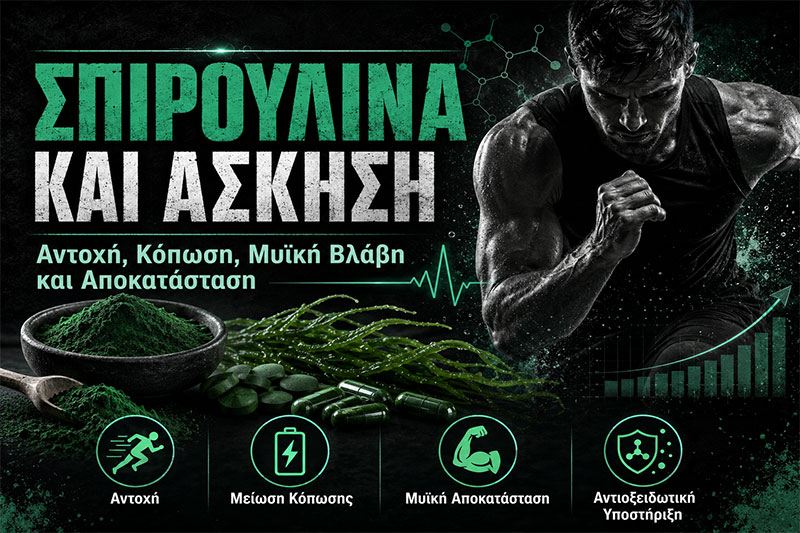 Spirulina, commonly referring to Arthrospira platensis or Arthrospira maxima, is a photosynthetic cyanobacterium often commercially described as a blue-green microalga. It is protein-rich and contains bioactive compounds including phycocyanin, carotenoids and several antioxidant-related constituents. Sports-nutrition research has investigated Spirulina for potential effects on endurance, substrate utilization, hemoglobin, oxidative stress, fatigue and recovery from strenuous exercise. Current evidence is promising in selected settings but remains inconsistent overall. Related site sections include Sports Nutrition and Antioxidants. Spirulina and EnduranceOne frequently cited crossover trial involved only nine moderately trained men receiving: 6 g/day for four weeks. Participants subsequently ran for two hours at 70–75% VO₂max before running at 95% VO₂max until exhaustion. Time to fatigue during the final exercise increased from approximately:
Carbohydrate oxidation decreased by around 10.3%, while fat oxidation increased by approximately 10.9%. These findings are encouraging, but the extremely small sample limits generalization. Fat OxidationThe same study is frequently cited to support claims that Spirulina increases fat burning. It did increase fat oxidation during prolonged running. However, acute fat oxidation during exercise is not equivalent to long-term body-fat loss. Spirulina therefore should not be classified as a fat burner based on this result. Trained CyclistsA crossover trial in 15 trained male cyclists investigated 6 g/day for 21 days. Spirulina produced:
Peak sprint power was approximately 968 W versus 929 W, while average power was around 770 W versus 738 W. However, 16.1-km cycling time-trial performance did not improve. The distinction between laboratory physiological changes and actual race-like performance is therefore important. Spirulina and HemoglobinSeveral studies report changes in hemoglobin. A randomized crossover trial involving 17 recreationally active adults found that 6 g/day for 14 days increased hemoglobin by approximately 3.4% compared with placebo. Nevertheless, there were no significant improvements in:
A higher hemoglobin concentration therefore does not necessarily translate into an acute performance advantage. Exercise EconomyIn 11 men untrained in arm cycling, 6 g/day for seven days reduced oxygen consumption and heart rate during two 30-minute submaximal arm-cycling bouts. Oxygen uptake at fatigue during the incremental test was higher after Spirulina, but time to fatigue itself did not significantly improve. Again, potentially favorable physiological changes did not produce a clear performance advantage. Spirulina and FatigueA randomized double-blind trial using 3 g/day reported a small statistically significant increase in exercise work output after one week. Selected measures of mental and subjective fatigue also improved. This suggests a possible fatigue-related effect but does not establish Spirulina as a strong ergogenic aid in trained athletes. Elite AthletesEvidence becomes less convincing at higher training levels. In 22 elite male rugby players, 5.7 g/day for seven weeks did not provide significant additional improvements in:
compared with placebo. Jump and sprint measures improved over the training period, but the between-group differences were not significant. Benefits may therefore be smaller in highly trained athletes. Oxidative StressThe antioxidant-related evidence is more consistently positive. In the Kalafati trial, Spirulina increased reduced glutathione and prevented the exercise-related increase in TBARS observed in the placebo condition. Earlier controlled research also reported lower malondialdehyde, altered antioxidant-enzyme activity and longer time to exhaustion following Spirulina platensis. The systematic review concluded that several trials show improved antioxidant status after exercise, although study heterogeneity remains substantial. Is Lower Oxidative Stress Always Better?No. Reactive oxygen species are not exclusively harmful. They also act as signals involved in normal exercise adaptation. A reduction in an oxidative-stress biomarker therefore does not automatically demonstrate faster recovery, greater strength or superior long-term training adaptations. Performance and functional outcomes must be evaluated separately. Muscle Damage and RecoveryRecovery findings are mixed. A controlled trial following eccentric muscle-damaging exercise found no significant benefit of Spirulina on:
Spirulina therefore cannot currently be considered an established supplement for DOMS or acute recovery. What Does the Spirulina-Specific Systematic Review Conclude?The systematic review included 13 relevant studies. Several reported favorable changes in antioxidant defenses, exercise tolerance and selected markers of muscle damage. However, the authors concluded that evidence regarding performance, immunity and recovery in healthy exercising individuals remains limited and inconsistent. The Newer 2026 Meta-AnalysisA 2026 systematic review and meta-analysis examined 22 randomized trials involving 822 participants and several algae-derived supplements, including Spirulina and Chlorella. Across the pooled algae literature, supplementation was associated with:
A critical limitation is that this analysis was not Spirulina-specific. The pooled results included several different algae-derived interventions and should therefore not be attributed entirely to Spirulina. Spirulina Plus Exercise and VO₂maxA recent meta-analysis examining adults with overweight or obesity evaluated 1–6 g/day of Spirulina combined with structured exercise for 6–12 weeks. The combination was associated with an approximately 3.25 mL/kg/min increase in VO₂max, alongside improvements in several anthropometric and cardiometabolic outcomes. However, these participants were not trained athletes. The result cannot automatically be extrapolated to already well-trained runners, cyclists or competitive athletes. Immune ResponsesA controlled study involving 19 members of the Polish national rowing team investigated 1,500 mg/day of Spirulina extract for six weeks. Several exercise-related changes in lymphocyte subpopulations differed from placebo, suggesting a possible immunomodulatory effect during strenuous exercise. Nevertheless, the broader systematic review considers evidence for meaningful immune benefits in exercising humans insufficient for firm conclusions. Is Spirulina an Important Protein Source for Athletes?Dry Spirulina can contain approximately 60–70% protein and includes all indispensable amino acids. The practical quantity matters, however. An exercise protocol providing 6 g of Spirulina per day supplies only a few grams of actual protein. It should therefore not be treated as a replacement for a conventional high-protein food or protein source when athletes require tens of grams of protein for recovery and muscle-protein synthesis. Does Spirulina Build Muscle?There is insufficient evidence that Spirulina directly increases muscle hypertrophy in trained athletes. The elite-rugby study did not demonstrate superior body-composition, maximal-strength or power adaptations compared with placebo. The evidence base is considerably more relevant to endurance physiology and oxidative-stress responses than to hypertrophy. Research DosesNo universal evidence-based athletic dose has been established. Human exercise studies have commonly used:
These are experimental protocols, not established universal sports recommendations. Who May Respond Best?The literature suggests that improvements may be more likely in:
Effects in elite or highly trained athletes appear less consistent. This remains a hypothesis rather than a firmly established responder profile. ConclusionSpirulina is an interesting but not firmly established sports-performance supplement. Small human studies report improvements in time to fatigue, fat oxidation, submaximal heart rate and lactate, hemoglobin and selected oxidative-stress markers. Conversely, several controlled trials show no improvement in VO₂max, time-trial performance, maximal strength, DOMS or recovery of muscle function. The Spirulina-specific systematic review therefore describes the evidence as promising but still limited and inconsistent. Spirulina should currently be regarded as a potentially useful nutritional strategy for selected endurance and antioxidant-related outcomes rather than an established ergogenic aid. FAQCan Spirulina improve endurance? Does Spirulina increase VO₂max? Does Spirulina increase fat oxidation? Does it improve recovery? What doses are used in studies? References
|

Best supplements store
CHOOSE CATEGORY
CATEGORIES








(c) katerelosfitness.gr - All rights reserved - By: Hyper Center -