


 0

Resveratrol and Exercise: Mitochondria, Endurance and Training Adaptations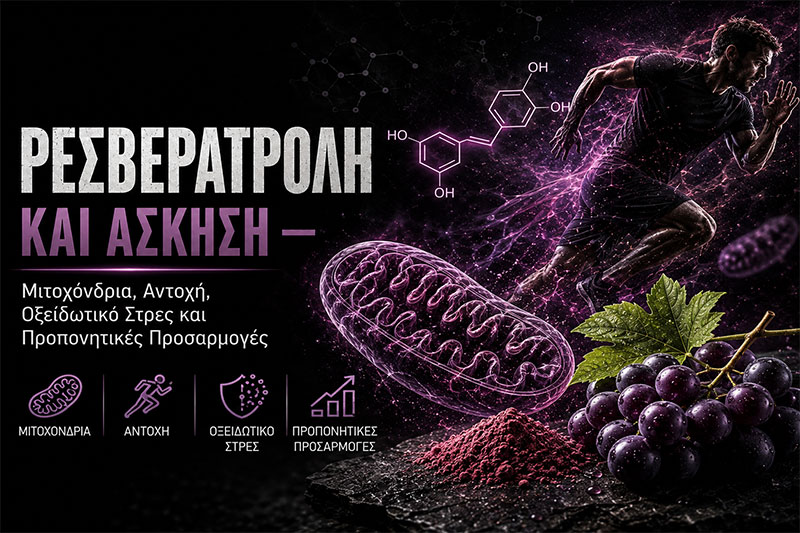 Resveratrol is a naturally occurring stilbene polyphenol found in foods including grape skins, berries and peanuts. It has attracted major interest because of proposed effects on mitochondrial biology, inflammation, oxidative stress and pathways involving SIRT1. In sports nutrition, however, there is an important contradiction. Animal research has frequently reported impressive mitochondrial and endurance effects, while human trials have not demonstrated a consistent ergogenic benefit. Several controlled human studies have even suggested that concurrent resveratrol supplementation may attenuate selected adaptations to exercise training. Resveratrol and SIRT1SIRT1 is frequently presented as one of resveratrol's principal molecular targets. However, a 2025 meta-analysis of 11 randomized controlled trials found no significant overall effect of resveratrol on human SIRT1 gene expression, protein expression or circulating SIRT1 levels. The commonly repeated model in which oral resveratrol simply “activates SIRT1” in humans is therefore considerably more complex than often suggested. Can Resveratrol Mimic Exercise?Current human evidence does not support describing resveratrol as an exercise mimetic. In older men, exercise training increased multiple markers of skeletal-muscle mitochondrial metabolism and improved endurance capacity, whereas resveratrol alone did not reproduce those adaptations. Exercise remains a much broader and more powerful physiological stimulus than an isolated polyphenol. Resveratrol Blunted Exercise Adaptation in Older MenTwenty-seven healthy but physically inactive older men completed eight weeks of high-intensity exercise training while receiving placebo or 250 mg/day of trans-resveratrol. Training increased maximal oxygen uptake in both groups, but the increase was approximately 45% greater with placebo. Mean arterial pressure decreased by approximately 4.8 mmHg in the placebo group but not with resveratrol. Selected improvements in blood lipids were also attenuated by resveratrol. The investigators concluded that resveratrol blunted several cardiovascular benefits of exercise training in these older men. What About HIIT in Young Adults?A double-blind study involving 16 recreationally active young men provides similar caution. Participants completed four weeks of low-volume HIIT while consuming placebo or 150 mg/day of resveratrol. Peak aerobic power increased significantly only with placebo. Wingate peak power increased from approximately 747 to 809 W in placebo but only from approximately 679 to 691 W in the resveratrol group. Training-induced changes in PGC-1α, SIRT1 and SOD2 gene expression were also significantly lower with resveratrol. Why Could an Antioxidant Blunt Training Adaptation?Exercise-generated reactive oxygen species are not purely harmful. At physiological concentrations, ROS act as signaling molecules involved in mitochondrial biogenesis, endogenous antioxidant defense and metabolic adaptation. A systematic review and meta-analysis of dietary polyphenols and training adaptations reported that resveratrol showed a tendency toward impaired training adaptation, although the pooled resveratrol result did not reach conventional statistical significance. This supports an important principle: completely suppressing exercise-induced oxidative signaling is not necessarily beneficial. Positive Evidence in Older AdultsNot every study is negative. Thirty adults aged 65–80 completed 12 weeks of combined aerobic and resistance exercise while receiving placebo or 500 mg/day of resveratrol. The resveratrol group showed approximately 8% greater knee-extensor peak torque, 14% greater average peak torque and 14% greater power after training. Mitochondrial-density markers, muscle fatigue resistance, muscle-fiber area and myonuclei also showed favorable changes. These findings suggest a possible benefit in selected older populations with reduced muscular adaptive capacity. They should not be automatically extrapolated to young trained athletes. Mitochondrial CapacityA small trial involving 16 young adults examined 500 mg/day resveratrol combined with 10 mg piperine during four weeks of localized endurance training. Mitochondrial capacity increased approximately 40% from baseline in the resveratrol-plus-piperine condition compared with about 10% with placebo. Because piperine was included as a bioavailability enhancer, the result cannot be attributed solely to resveratrol. Does Resveratrol Improve Endurance Performance?Direct human evidence is largely unconvincing. A randomized crossover pilot involving 13 healthy sedentary adults found no significant improvement in exercise duration or peak oxygen uptake after four weeks of resveratrol. In another crossover trial, eight male athletes consumed 480 mg/day for four days before cycling at 80% VO₂max. Time to exhaustion was not significantly improved. Resveratrol therefore does not currently qualify as a reliably effective acute endurance ergogenic aid. Exercise-Induced IL-6In the same eight-athlete cycling study, resveratrol reduced the exercise-induced IL-6 response. However, it did not improve exercise performance, fatigue, CK, LDH or overall oxidative-stress responses. A lower inflammatory biomarker therefore should not automatically be interpreted as better exercise performance or recovery. Muscle GlycogenA small crossover study involving nine young male athletes examined resveratrol during post-exercise carbohydrate recovery. Muscle glycogen increased normally during recovery, but resveratrol did not accelerate glycogen replenishment compared with placebo. There is therefore no convincing evidence that resveratrol improves post-exercise glycogen restoration. DOMS and Muscle RecoveryA 2024 systematic review included 10 studies and a total of 238 participants. Some trials reported reductions in CK, LDH or delayed-onset muscle soreness, but findings varied substantially according to dose, exercise model, participant characteristics and supplementation timing. The current recovery evidence should therefore be considered promising but inconclusive. Marathon RecoveryA very small randomized pilot trial involved seven male marathon runners receiving 600 mg/day for seven days before the marathon. Resveratrol did not demonstrate a convincing reduction in post-marathon inflammatory responses or DOMS. The study was far too small for definitive conclusions, but it provides no strong support for an acute marathon-recovery effect. Is Lower Inflammation Always Better?Not necessarily. Transient exercise-induced inflammatory and oxidative signals contribute to tissue remodeling and adaptation. In older men, exercise training reduced muscle TNF-α mRNA and protein carbonylation. Concurrent resveratrol blunted these beneficial training-associated changes. This reinforces the need to distinguish short-term biomarker suppression from long-term training benefit. Is Resveratrol More Relevant to Older Adults?Possibly. A 2024 systematic review in older adults found that combining resveratrol with exercise improved selected measures of muscle function, training adaptation and mobility in some studies. However, results were not consistent and the optimal dose and long-term effects remain unclear. In young and already active populations, evidence for benefit is considerably weaker, with several studies raising the possibility of attenuated adaptations. Research DosesHuman exercise studies have commonly used approximately 150–600 mg/day, although considerably higher amounts have been tested in clinical research outside sports. There is currently no established evidence-based athletic dose. Higher intake also does not necessarily produce greater benefit. BioavailabilityResveratrol undergoes extensive metabolism. After oral ingestion, glucuronide and sulfate metabolites circulate at concentrations that can greatly exceed those of free resveratrol itself. This limited systemic exposure to unchanged resveratrol is one reason why dramatic cell-culture effects do not necessarily translate directly to humans. SafetyModerate supplemental doses are generally tolerated in clinical studies, but gastrointestinal adverse effects become more common at high intake. In 40 healthy volunteers receiving 0.5–5 g/day for 29 days, the 2.5- and 5-g/day doses produced more mild-to-moderate gastrointestinal symptoms. Another small exercise-capacity trial also reported substantially more gastrointestinal side effects during resveratrol treatment than placebo. High-dose resveratrol may additionally interact with drug metabolism through CYP enzymes, making medication interactions relevant. Is Resveratrol an Ergogenic Aid?Based on current human evidence, no. There is no consistent evidence that resveratrol reliably improves VO₂max, time to exhaustion, sprint capacity or high-intensity exercise performance in trained humans. More importantly, key exercise-training trials suggest that concurrent supplementation can attenuate selected cardiovascular, aerobic and molecular adaptations. Positive findings in older adults are scientifically interesting but cannot automatically be transferred to healthy competitive athletes. ConclusionResveratrol is a good example of a nutraceutical with impressive mechanistic biology but inconsistent translation into human sports performance. The proposed mechanisms involve SIRT1, PGC-1α, mitochondria and redox signaling. However, a 2025 meta-analysis found no significant overall increase in human SIRT1 following supplementation. In young men undergoing HIIT, 150 mg/day failed to enhance performance adaptations and was associated with smaller changes in PGC-1α, SIRT1 and SOD2. In older men, 250 mg/day attenuated part of the VO₂max and cardiovascular response to training. Conversely, 500 mg/day combined with exercise produced encouraging muscular and functional effects in older adults. For exercise recovery, a 2024 systematic review reported possible benefits for DOMS and muscle-damage biomarkers, but the evidence remains heterogeneous and insufficient for firm conclusions. Resveratrol should therefore currently be considered an interesting polyphenol with potential applications in selected older or clinical populations, but not an established supplement for endurance, strength or athletic performance. In healthy athletes, its potential to attenuate some normal exercise-training adaptations is an important consideration. FAQDoes resveratrol improve VO₂max?Not reliably. One major trial found that training-induced improvements in maximal oxygen uptake were greater with placebo than with concurrent resveratrol. Does it improve endurance?Current controlled human trials do not show a consistent improvement in time to exhaustion or exercise capacity. Does resveratrol increase SIRT1?A 2025 meta-analysis found no significant overall effect on SIRT1 gene expression, protein expression or circulating levels. Can it blunt training adaptations?Some human RCTs suggest that it may attenuate selected cardiovascular, aerobic and molecular responses to endurance or HIIT training. Can it improve muscle recovery?Some studies report improvements in DOMS or muscle-damage biomarkers, but overall evidence remains inconsistent. Is there an established athletic dose?No. There is currently no universally established evidence-based resveratrol dose for exercise performance. References
|

Best supplements store
CHOOSE CATEGORY
CATEGORIES







(c) katerelosfitness.gr - All rights reserved - By: Hyper Center -