


 0


Astaxanthin for Skin: What Human Studies Show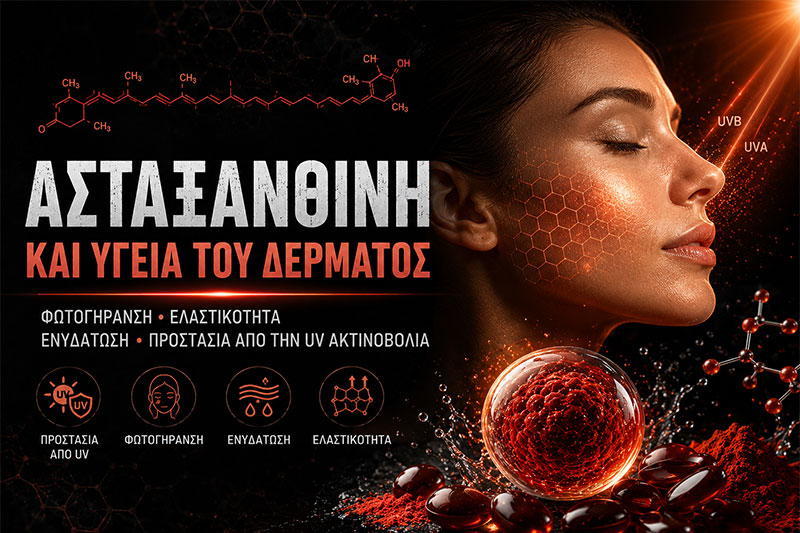 Astaxanthin is a fat-soluble carotenoid with a characteristic reddish colour. It is produced by certain microalgae and occurs naturally in aquatic organisms such as salmon, trout and shrimp. Scientific interest in skin health primarily concerns photoaging, hydration, elasticity and the skin’s response to ultraviolet radiation. Some human trials have reported positive findings, but the overall evidence remains limited. Quick AnswerSmall clinical trials suggest that astaxanthin may help maintain skin moisture and elasticity and may moderate selected changes caused by UV exposure. However:
Astaxanthin is not a sunscreen and should not replace established sun-protection measures. What Is Photoaging?Photoaging is the gradual deterioration of skin structure and appearance caused by repeated exposure to ultraviolet radiation. It may involve:
UV radiation increases reactive oxygen species and activates enzymes involved in degrading components of the extracellular matrix. This is one reason dietary carotenoids such as astaxanthin have been investigated. Astaxanthin and the Skin’s Response to UV RadiationA randomized, double-blind, placebo-controlled trial involved 23 healthy Japanese participants. Taking 4 mg of astaxanthin daily for approximately nine weeks increased the minimal UV dose required to produce visible erythema. It also reduced moisture loss in the irradiated area. Ito et al., 2018 This finding suggests a possible increase in resistance to controlled UV exposure. It does not demonstrate that astaxanthin functions as sunscreen, provides a measurable SPF or prevents skin cancer. The study was very small. All authors were also employed by the company that sponsored and funded the trial, which should be considered when interpreting the result. Skin Hydration and Barrier FunctionThe skin barrier helps retain water and protects against external stressors. Its function is frequently assessed by measuring transepidermal water loss, or TEWL. In a double-blind trial involving 36 healthy men, 6 mg of astaxanthin daily for six weeks was associated with improvements in TEWL, elasticity and crow’s-feet wrinkle measurements. Tominaga et al., 2012 The same publication included an uncontrolled study involving 30 women. Oral and topical astaxanthin were used together, meaning that the results cannot be attributed solely to supplementation. The findings suggest a potential effect on skin-barrier function, but larger independent trials are required. Elasticity and WrinklesIn a 16-week clinical trial, 65 healthy women received 6 mg, 12 mg of astaxanthin or placebo. Wrinkle parameters and moisture deteriorated in the placebo group during the study period, while comparable significant deterioration did not occur in the astaxanthin groups. Tominaga et al., 2017 This result primarily represents maintenance of skin condition rather than the disappearance of wrinkles. All authors were professionally affiliated with an astaxanthin company, limiting the independence of the evidence. Astaxanthin has not been shown to reverse skin aging or produce effects equivalent to dermatological treatments. Does Astaxanthin Increase Collagen Production?A study involving 44 women with photoaged skin used a combination of 2 mg of astaxanthin and 3 g of collagen hydrolysate daily for 12 weeks. Improvements in elasticity and skin-barrier function were reported. Changes in procollagen and matrix-metalloproteinase expression were also observed in a small subgroup. Yoon et al., 2014 Because astaxanthin and collagen were administered together, the trial cannot demonstrate that astaxanthin independently increased collagen production. There is insufficient human evidence that isolated astaxanthin rebuilds skin or restores lost collagen. Can Astaxanthin Reduce Dark Spots?Uncontrolled trials have reported changes in the appearance of selected skin spots. These findings do not provide strong evidence because results can be affected by season, sun exposure, cosmetic use and other factors. Astaxanthin has not been shown to treat melasma, actinic damage or other pathological skin changes. Persistent or changing skin lesions require assessment by a dermatologist. Astaxanthin Is Not SunscreenAstaxanthin should not be used as an alternative to:
An increase in minimal erythema dose during a small controlled trial does not convert a dietary supplement into an approved sunscreen product. Dosage and DurationSkin-related trials have generally used 4–12 mg of astaxanthin daily for six to 16 weeks. These amounts represent research protocols, not an established therapeutic dosage. Astaxanthin is fat-soluble, and its absorption may be affected by the composition of the meal and the formulation used. EFSA concluded that 8 mg of supplemental astaxanthin per day is safe for adults, even when combined with a high estimated dietary intake. This assessment concerns safety rather than effectiveness for skin health. EFSA NDA Panel, 2020 ConclusionAstaxanthin is of scientific interest for maintaining skin hydration, elasticity and the skin’s response to UV radiation. Some small human trials have reported positive changes. The evidence is limited, however, by small samples, frequent industry involvement and the use of combination interventions. Astaxanthin may be considered an investigational nutritional ingredient for skin health. It is not an anti-aging treatment, has not been proven to remove wrinkles and does not replace sunscreen or medical care. FAQCan astaxanthin improve skin hydration?Small trials suggest possible improvements in moisture and transepidermal water loss. Larger independent studies are needed. Does astaxanthin reduce wrinkles?Minor changes in selected wrinkle measurements have been reported. It has not been shown to remove or reverse wrinkles. Does it protect skin from the sun?One small study reported an increased minimal erythema dose. Astaxanthin is not sunscreen and does not replace external sun protection. Does astaxanthin increase skin collagen?Astaxanthin alone has not been shown to increase collagen production clinically. Positive findings have primarily involved combinations with collagen hydrolysate. How long did the studies last?Most relevant trials lasted approximately six to 16 weeks. This does not mean everyone will experience a result within the same period. What dose was used in research?Human skin studies generally used 4–12 mg daily. No therapeutic dosage has been established for photoaging or wrinkles. Scientific References
|

Best supplements store
CHOOSE CATEGORY
CATEGORIES









(c) katerelosfitness.gr - All rights reserved - By: Hyper Center -