


 0







Astaxanthin and Eye Health: Screens, Fatigue and Vision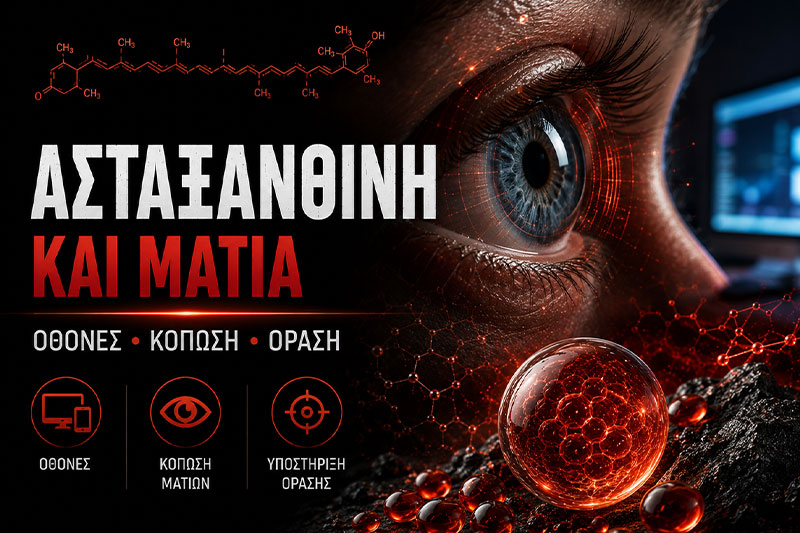 Astaxanthin is a fat-soluble carotenoid found in microalgae and marine organisms. Research concerning eye health has focused mainly on digital eye strain, visual accommodation and ocular circulation. Does Astaxanthin Really Support Eye Health?Short answer: Small clinical studies indicate possible improvements in selected eye-strain symptoms and visual-function measurements. The evidence does not demonstrate that astaxanthin generally improves eyesight or prevents and treats eye disease. Many trials used astaxanthin together with lutein, zeaxanthin or anthocyanins. Their results therefore cannot be attributed to astaxanthin alone. Astaxanthin and Digital Eye StrainProlonged computer and smartphone use may be associated with focusing difficulty, dryness, headache, blurred vision and eye fatigue. These symptoms may be influenced by:
In a randomized trial, 44 adults experiencing eye fatigue after screen use received a combination of anthocyanins, astaxanthin and lutein or placebo for six weeks. Among the 40 participants included in the efficacy analysis, the combination improved selected pupillary-response measurements and symptoms related to focusing difficulty. Tear measurements and macular pigment optical density did not clearly improve. Because three active ingredients were used, the contribution of astaxanthin cannot be isolated. The study was funded by the companies involved. Kizawa et al., 2021 A newer trial involved 64 children aged 10–14 years who used screens for at least four hours daily. Participants received 4 mg of astaxanthin or placebo for 84 days. The astaxanthin group experienced a greater reduction in digital-eye-strain symptom scores. There were no significant between-group differences in visual acuity, near point of accommodation or tear production. The manufacturer funded the trial, and several authors were employed by affiliated companies. Hecht et al., 2025 These findings are interesting, but they do not constitute a general recommendation to give astaxanthin supplements to children. Visual Accommodation and Visuomotor FunctionAccommodation is the process through which the eye changes focus between near and distant objects. Prolonged near work may temporarily strain this mechanism. In a randomized, double-blind 2023 trial, healthy adults received 6 mg of astaxanthin, 10 mg of lutein and 2 mg of zeaxanthin daily for eight weeks. The combination reduced the decline in eye–hand coordination following screen activity but did not clearly improve smooth-pursuit eye movement. The study did not assess astaxanthin alone and was funded by a company employing four of the authors. Yoshida et al., 2023 It has not been established that these changes improve everyday eyesight, myopia or athletic performance. Astaxanthin and Ocular Blood FlowIn a small study involving 20 healthy volunteers, 12 mg of astaxanthin daily for four weeks increased a measure of relative choroidal blood-flow velocity compared with baseline. No corresponding change was observed in the placebo group. Saito et al., 2012 This result does not demonstrate disease prevention or improved vision. The trial involved only 20 people, lasted four weeks and included an author employed by the company that supplied the capsules. Does It Protect Against Blue Light?Astaxanthin has antioxidant activity in laboratory and animal models. This does not prove that it protects human eyes from the blue light emitted by digital screens. There is insufficient clinical evidence that astaxanthin alone prevents screen-related retinal damage. Reducing digital-eye-strain symptoms is not the same as protecting the eyes from permanent injury. Macular Health and Eye DiseaseIn the two-year CARMIS study, 145 people with age-related macular degeneration were randomized to a multi-ingredient supplement or no supplementation. The formula contained lutein, zeaxanthin, 4 mg of astaxanthin, vitamins and other antioxidants. The intervention group experienced better results in selected measures of visual function. Piermarocchi et al., 2012 Because the trial was open-label and used multiple ingredients, it does not establish that astaxanthin caused the findings. Astaxanthin should not be considered a treatment for:
Changes in vision, eye pain, flashes, new floaters or sudden blurring require prompt professional assessment. Dosage and SafetyEye-health trials have used different protocols, generally involving 4–12 mg of astaxanthin daily for four to twelve weeks. These are research protocols rather than personalised dosage recommendations. EFSA concluded that 8 mg daily from supplements is safe for adults, even when combined with a high estimate of dietary exposure. The same assessment found that this amount, when combined with high dietary intake, may exceed the acceptable daily intake in children younger than 14 years. EFSA NDA Panel, 2020 Pregnancy, breastfeeding, childhood, medication use or a diagnosed eye condition require guidance from an appropriate healthcare professional. ConclusionAstaxanthin shows potential for supporting selected symptoms of digital eye strain and certain visual-function measurements. The evidence, however, is based mainly on small and frequently commercially funded studies, several of which used combinations of ingredients. It has not been shown to generally improve eyesight, correct refractive errors or prevent and treat eye disease. Screen breaks, appropriate lighting and viewing distance, regular blinking and professional eye examinations remain more important. FAQCan astaxanthin reduce screen-related eye fatigue?Small studies have reported positive findings, but the evidence is not yet conclusive. Several trials used combinations of multiple ingredients. Does it improve eyesight or visual acuity?It has not been shown to improve normal eyesight, correct myopia or replace glasses and contact lenses. Does astaxanthin protect against blue light?Antioxidant mechanisms have been proposed, but there is insufficient clinical evidence that astaxanthin alone prevents damage from screen light. Can it help dry eye?There is insufficient evidence to consider astaxanthin an effective treatment for dry eye. Persistent symptoms require professional assessment. Can it be used for age-related macular degeneration?It is not an established treatment. Studies involving patients used multi-ingredient formulas, making it impossible to isolate astaxanthin’s effects. What dose has been studied?Clinical trials have generally used 4–12 mg daily for limited periods. These amounts describe research protocols and are not personal dosage recommendations. Scientific References
|

Best supplements store
CHOOSE CATEGORY
CATEGORIES










(c) katerelosfitness.gr - All rights reserved - By: Hyper Center -