0
0



|
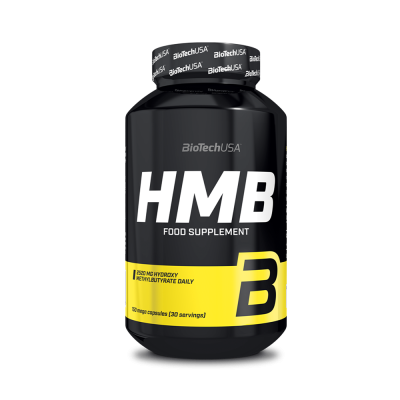
ΕΠΙΛΟΓΕΣ HMB (β-hydroxy-β-methylbutyric acid) is a bioactive metabolite of the essential branched-chain amino acid leucine. It is produced naturally in the human body through the metabolism of leucine, however, the endogenous amounts formed are very small (approximately 0.2–0.4 g per day) and are not sufficient to produce significant ergogenic or anti-catabolic effects. For this reason, HMB is widely used as a dietary supplement.
At a biochemical level, HMB acts mainly by reducing muscle catabolism and supporting muscle protein synthesis. Specifically, it inhibits the activity of the ubiquitin–proteasome system, which is the main mechanism for the breakdown of muscle proteins, thus limiting the muscle degradation observed in conditions of intense exercise, caloric deficit, metabolic stress or disease. In addition, HMB has been shown to activate the mTOR anabolic pathway, which plays a central role in regulating muscle protein synthesis, contributing to the maintenance and, in some cases, the increase of lean muscle mass.
In addition, HMB appears to enhance the stability of muscle cell membranes, promoting cholesterol synthesis within the muscle cell, which reduces muscle damage caused by mechanical or metabolic stress. As a result of these mechanisms, HMB supplementation has been associated with reduced markers of muscle breakdown, faster recovery after exercise, improved muscular endurance and strength, and better preservation of muscle mass.
It is mainly available in two forms on the market: HMB-Ca (calcium salt), which is characterized by greater stability but slower absorption, and HMB-FA (free acetate form), which exhibits faster absorption and increased bioavailability. The overall scientific literature classifies HMB as a safe and well-studied supplement, with particularly strong benefits in novice athletes, in periods of intense training or caloric stress, as well as in populations at increased risk of muscle loss, such as the elderly or people in recovery.
|
||
 |
||
|
||

Best supplements store
CHOOSE CATEGORY
CATEGORIES

INTERESTING ARTICLES
-
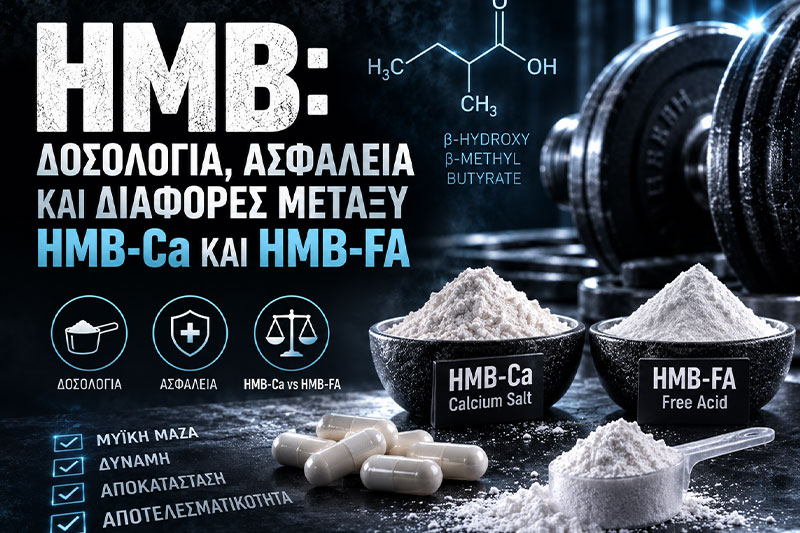
HMB Dosage and Safety: HMB-Ca vs HMB-FA Explained
Explore studied HMB doses, safety evidence and the differences between HMB-Ca and HMB-FA. Learn why absorption does not establish muscle-building benefits.
HMB for Strength and Recovery: What the Studies Show
Does HMB improve strength or recovery after resistance training? Understand the research and why muscle damage markers do not prove better performance.
HMB and Muscle Mass: What Does the Research Show?
What is HMB, and can it increase muscle mass? Explore the evidence in young adults, older people and patients with sarcopenia, including key limitations.
HMB Supplement: Benefits, Dosage and Uses
Learn what HMB is, how it relates to leucine, who may benefit from it and what research says about recovery and performance.