


 0
0
Taurine and Exercise: Benefits and Scientific Evidence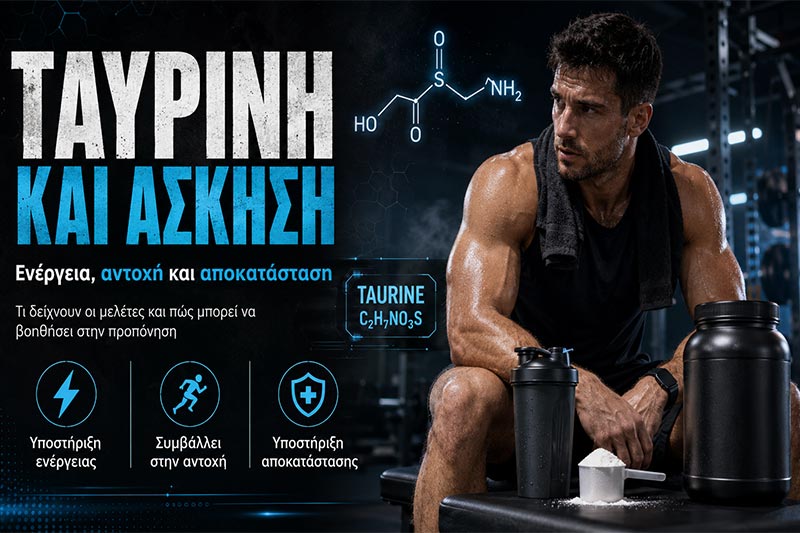 What is taurine?Taurine is a sulphur-containing compound naturally found throughout the body. Although often discussed alongside amino acids, it is not used to build proteins in the same way as leucine or lysine. It participates in cellular fluid balance, nervous-system function, calcium handling and mechanisms involved in muscular contraction. Is taurine a stimulant?Taurine is not a stimulant like caffeine. Its frequent inclusion in energy drinks has created this misconception, but the primary stimulant effect of these products usually comes from caffeine. A caffeine-free product containing taurine should not be expected to produce the same immediate stimulatory sensation. Can taurine support performance?A review of 19 studies identified possible benefits for selected measurements of endurance, power, muscle damage and recovery. However, the researchers emphasised that the evidence was limited and varied, preventing definitive conclusions. A 2025 meta-analysis reported a small-to-moderate overall improvement after acute taurine intake, but also identified substantial variation between studies and inconsistent findings for several exercise outcomes. How much taurine has been studied?Research commonly includes amounts around 1–3 g before exercise, although several different protocols have been tested. Variation in dosage, timing and exercise type is one reason that results remain inconsistent. ConclusionTaurine is an interesting sports nutrition ingredient, particularly in stimulant-free products or multi-ingredient pre-workout formulas. The evidence is promising but currently less established than the evidence supporting caffeine or creatine. ReferencesKurtz JA et al. Taurine in Sports and Exercise. Published: 2021. Deng H et al. Does One Shot Work? The Acute Impact of a Single Taurine Dose on Exercise Performance: A Meta-Analysis. Published: 2025. |

Best supplements store
CHOOSE CATEGORY
CATEGORIES





(c) katerelosfitness.gr - All rights reserved - By: Hyper Center -