


 0
0








Collagen for Joints and Tendons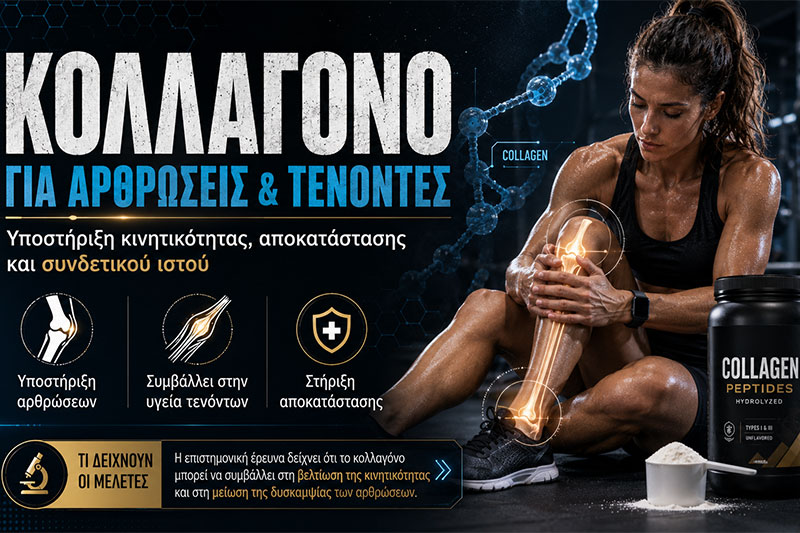 What is collagen?Collagen is a major structural protein of connective tissue. It is found in tendons, ligaments, cartilage, bones and skin. Most supplements contain hydrolysed collagen or collagen peptides. Hydrolysis breaks the protein into smaller peptides, improving solubility and digestion. Can collagen support joint function?Systematic reviews report that collagen peptides, particularly when combined with exercise, may support selected outcomes involving joint function, discomfort, body composition and connective-tissue recovery. Results are not identical across all studies and depend on the population, duration, exercise programme and type of collagen product. What about tendons and ligaments?Mechanical loading through appropriate exercise is the primary stimulus for tendon adaptation. Collagen cannot replace progressive and individualised rehabilitation. Research suggests that exercise combined with vitamin C-enriched collagen may increase markers of collagen synthesis. This is an interesting finding, but it does not prove that every injury will recover more rapidly. Is collagen suitable for muscle growth?Collagen is not a complete protein with a high concentration of essential amino acids and leucine. For directly stimulating muscle protein synthesis, whey, milk protein, egg protein or an appropriately combined plant protein is generally more suitable. Collagen should be considered an additional protein source with a connective-tissue focus rather than a replacement for all dietary protein. ConclusionCollagen peptides may be a useful addition for people interested in joints, tendons and connective tissue. Potential benefits are most relevant when supplementation is combined with appropriate exercise, sufficient nutrition and professional injury management. References
|

Best supplements store
CHOOSE CATEGORY
CATEGORIES










(c) katerelosfitness.gr - All rights reserved - By: Hyper Center -