


 0
0

PQQ and Exercise: Mitochondria, Energy and Endurance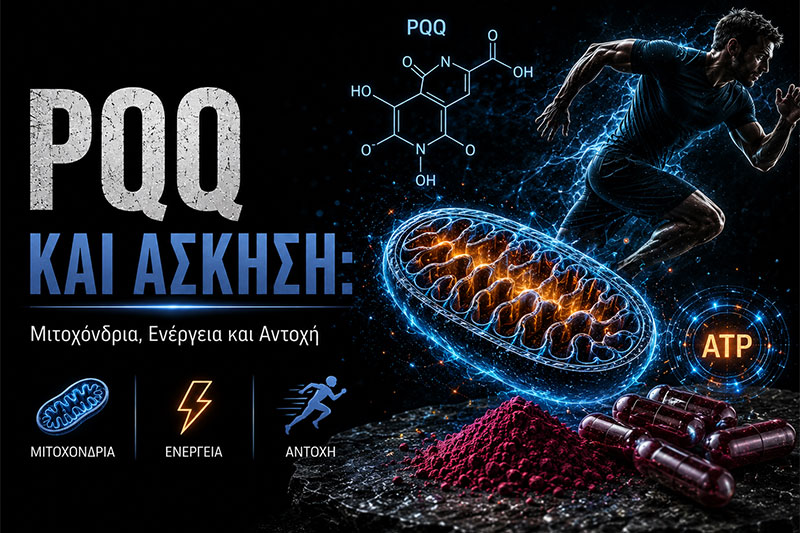 Pyrroloquinoline quinone, commonly known as PQQ, is a naturally occurring redox-active compound found in small amounts in various foods. It was originally identified as an enzyme cofactor in bacteria and is now being studied for its potential influence on mitochondria and cellular energy metabolism. Because mitochondria are essential for energy production during exercise, PQQ has been proposed as a possible aid for endurance, fatigue management and training adaptation. Human evidence, however, remains limited. What Is PQQ?PQQ is a quinone capable of participating in oxidation-reduction reactions. It has been detected in plant-derived and fermented foods, generally in trace quantities. Although sometimes described as a vitamin-like compound, it is not currently recognized as an essential human vitamin, and no recommended daily intake has been established. PQQ and Mitochondrial BiogenesisMitochondrial biogenesis is the process through which cells expand and renew their mitochondrial network. In skeletal muscle, it is an important component of adaptation to aerobic training. Preclinical research suggests that PQQ may influence pathways involving PGC-1α, CREB and other regulators of cellular energy metabolism. PGC-1α is considered a central coordinator of mitochondrial biogenesis. Animal research has found that PQQ intake or restriction can modify genes related to mitochondrial function, cellular stress responses and metabolism. These mechanistic observations do not establish an improvement in human exercise performance. (Tchaparian et al., 2010) What Does the Main Exercise Trial Show?The most directly relevant human trial included 23 men without previous endurance-training experience. Participants followed a supervised six-week aerobic training program while receiving either 20 mg of PQQ per day or placebo. PGC-1α protein levels increased more in the PQQ group, indicating a possible enhancement of molecular signaling associated with mitochondrial biogenesis. However, there were no significant between-group differences in:
Both groups improved as a result of training, but PQQ did not provide an additional measurable ergogenic benefit. A change in a molecular biomarker therefore did not translate into better exercise performance. (Hwang et al., 2019/2020) Effects on Energy MetabolismIn a small human study involving ten participants, short-term PQQ intake modified selected metabolites indirectly associated with mitochondrial function. Reductions in C-reactive protein and interleukin-6 were also reported. The study did not measure athletic performance, muscular strength or post-exercise recovery. Its very small sample and short duration also prevent broad conclusions. Changes in biomarkers alone do not prove that more energy is produced during exercise. (Harris et al., 2013) PQQ, Aerobic Endurance and FatigueThe hypothesis that PQQ could reduce fatigue is primarily based on the role of mitochondria in ATP production and oxidative-stress regulation. Current evidence does not demonstrate that PQQ directly increases endurance or delays exhaustion. In a 2026 randomized trial, 60 physically active men received a single dose of PQQ, NMN, their combination or placebo before an exhaustive treadmill test. PQQ influenced one subjective aspect of awareness of internal bodily signals, described as “body listening,” but did not significantly improve objective exercise-capacity measures. (Zhao et al., 2026) PQQ has therefore not been established as an acute pre-workout ingredient or a direct ergogenic aid. Can PQQ Support Exercise Recovery?Exercise temporarily increases the production of reactive oxygen species. This response is not entirely harmful because it also contributes to the signaling involved in training adaptation. PQQ has redox-related properties in laboratory models, but sufficient clinical evidence is lacking to show that it:
Potential changes in oxidative-stress or inflammatory biomarkers should not automatically be interpreted as proven recovery benefits. Quality of the EvidenceResearch on PQQ and exercise is limited by:
Activation of a biological pathway such as PGC-1α does not guarantee an increase in endurance, strength or athletic performance. Safety and Studied IntakeThe main exercise trial used 20 mg of PQQ per day for six weeks. Similar amounts have been examined for limited periods in other human studies. These amounts represent research protocols rather than universal recommendations. Evidence concerning long-term use, higher intakes and potential interactions remains limited. People taking medication, those with health conditions, and individuals who are pregnant or breastfeeding should seek professional guidance before using any dietary supplement. ConclusionPQQ is an interesting compound that may influence molecular pathways associated with mitochondrial biogenesis and energy metabolism. Available human research has not demonstrated that it improves aerobic endurance, reduces exercise fatigue or accelerates recovery. In the principal exercise trial, PGC-1α increased, but physical performance did not improve beyond the effect produced by training itself. Larger and independent studies are required before PQQ can be considered an evidence-based sports-performance supplement. FAQWhat is PQQ?PQQ is a naturally occurring redox-active compound found in trace amounts in food and studied for its possible effects on cellular metabolism. Does PQQ increase mitochondrial numbers?Mechanistic evidence suggests that it may influence mitochondrial-biogenesis signaling. The magnitude and practical importance of this effect in humans remain unclear. Does PQQ improve aerobic endurance?The primary human exercise trial did not demonstrate an additional improvement in aerobic performance compared with placebo. Can it reduce post-exercise fatigue?There is insufficient objective evidence that PQQ reduces physical fatigue or accelerates recovery after exercise. What amount has been studied for exercise?The main exercise study assessed 20 mg per day for six weeks. This was a research protocol and should not be interpreted as an individualized recommendation. Scientific References
|

Best supplements store
CHOOSE CATEGORY
CATEGORIES









(c) katerelosfitness.gr - All rights reserved - By: Hyper Center -