


 0
0







Sodium Bicarbonate and Exercise: Performance and Fatigue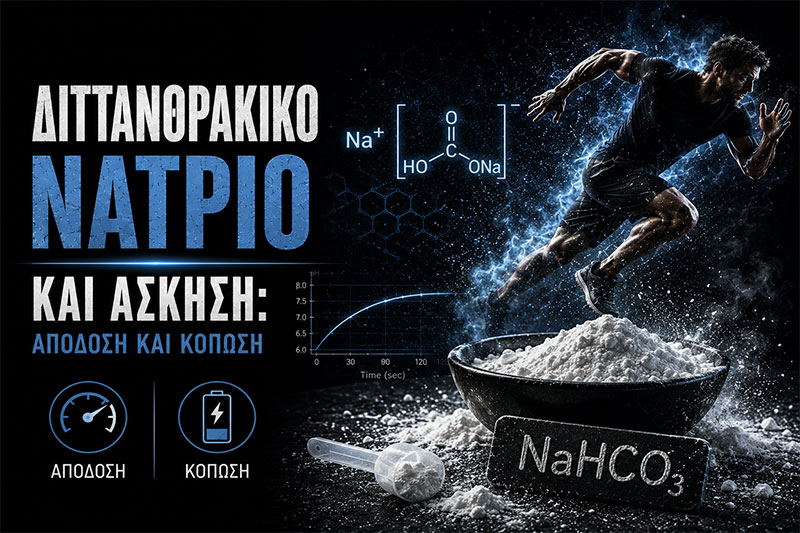 Sodium bicarbonate, also known as baking soda, is an alkaline compound used in sports nutrition as an extracellular buffering agent. Its proposed purpose is to support performance during intense exercise. Its effectiveness is best established for high-intensity efforts in which rapid energy production through anaerobic glycolysis is accompanied by substantial changes in acid–base balance. It does not provide the same benefit for every sport or every athlete. How Does Sodium Bicarbonate Work?During intense exercise, hydrogen-ion production and accumulation increase, potentially contributing to a reduction in intramuscular pH. This change may impair muscle contraction and the ability to maintain a high exercise intensity. Consuming sodium bicarbonate temporarily increases blood bicarbonate concentration and pH. This creates a larger concentration gradient between muscle cells and extracellular fluid, supporting the movement of hydrogen ions out of the muscle. Sodium bicarbonate does not simply enter muscle tissue and “neutralize lactic acid.” Its primary action involves increasing extracellular buffering capacity and supporting acid–base regulation. Which Types of Exercise May Benefit?The most consistent effects have been observed during high-intensity activities lasting approximately 30 seconds to 12 minutes. Examples include:
The International Society of Sports Nutrition position stand concluded that sodium bicarbonate may improve both single- and multiple-bout high-intensity exercise performance. (Grgic et al., 2021) An umbrella review also reported benefits for anaerobic power, events lasting approximately 45 seconds to 8 minutes, muscular endurance, 2,000-m rowing and intermittent running performance. The certainty of evidence varied across outcomes. (Grgic et al., 2021) Muscular Endurance or Maximal Strength?Sodium bicarbonate appears more useful when an athlete must perform repeated contractions or maintain a high work rate under fatigue. A meta-analysis of strength and endurance studies found a small but significant improvement in muscular endurance for both small and large muscle groups. No significant benefit was observed for maximal muscular strength. (Grgic et al., 2020) It may therefore be more relevant to a demanding high-repetition set than to a single one-repetition maximum attempt. Can It Support Longer-Duration Exercise?Its primary application involves short, intense exercise. Newer research has examined longer events that include sustained high intensity or a demanding finishing phase. In a randomized crossover trial involving 14 trained cyclists, 0.3 g/kg of sodium bicarbonate improved 40-km time-trial completion time by an average of approximately 54 seconds. The effect was small, and one study cannot establish a general benefit for all endurance events. (Shannon et al., 2024) What Amounts Have Been Studied?Most acute studies have used 0.2–0.3 g per kilogram of body mass. An intake of 0.3 g/kg is the most frequently studied, while higher amounts do not consistently provide additional benefits and may increase gastrointestinal symptoms. For example, 0.3 g/kg corresponds to:
These are examples of research protocols, not individualized recommendations. When Is It Taken Before Exercise?Studies commonly administer sodium bicarbonate 60–180 minutes before exercise. The increase in blood bicarbonate varies substantially between individuals, meaning that one fixed timing strategy may not be optimal for everyone. In world-class rowers, individualized timing based on peak blood bicarbonate produced a small but statistically significant improvement in 2,000-m performance compared with ingestion at a fixed 60-minute interval. Applying this approach requires laboratory testing. (Boegman et al., 2020) Gastrointestinal Side EffectsThe primary disadvantage is the risk of gastrointestinal symptoms, including:
A systematic review of 101 studies found that common acute amounts of 0.2–0.4 g/kg can produce symptoms ranging from mild to severe. Symptoms generally become more likely as the size of a single dose increases. (Winter et al., 2026) Strategies examined in research include:
No strategy completely eliminates the risk, and individual tolerance varies considerably. Sodium Intake and PrecautionsSodium bicarbonate contains approximately 27% sodium by weight. Therefore, 21 g of sodium bicarbonate provides approximately 5.7 g of sodium in addition to normal dietary intake. Particular caution is necessary for people with:
It should not be tested for the first time before an important competition. Tolerance should be assessed in advance, and people with health conditions or medication use require professional guidance. ConclusionSodium bicarbonate is one of the most extensively studied nutritional buffering agents for high-intensity exercise. It may provide a small but practically meaningful benefit for muscular endurance and activities in which acid–base disruption contributes to fatigue. It does not consistently increase maximal strength and is not equally effective for every form of exercise. Its high sodium content and frequent gastrointestinal side effects represent important limitations. FAQIs sodium bicarbonate the same as baking soda?Yes. Baking soda is sodium bicarbonate, with the chemical formula NaHCO₃. This does not mean that every household form is intended for sports supplementation. Which sports may benefit most?The strongest evidence concerns high-intensity exercise lasting approximately 30 seconds to 12 minutes, repeated efforts, combat sports and muscular-endurance training. Does it increase maximal strength?Meta-analyses do not show a significant improvement in maximal strength. Its potential benefit is more relevant to maintaining work and performing repetitions under fatigue. Why does it cause stomach discomfort?It reacts with stomach acid and may increase carbon-dioxide production. The large sodium load and solution concentration may also contribute to gastrointestinal symptoms. Can sodium bicarbonate be used every day?Evidence for long-term daily use remains limited. The high sodium intake and risk of adverse effects require caution. Scientific References
|

Best supplements store
CHOOSE CATEGORY
CATEGORIES









(c) katerelosfitness.gr - All rights reserved - By: Hyper Center -