


 0
0









Glycine and Exercise: Sleep, Recovery and Collagen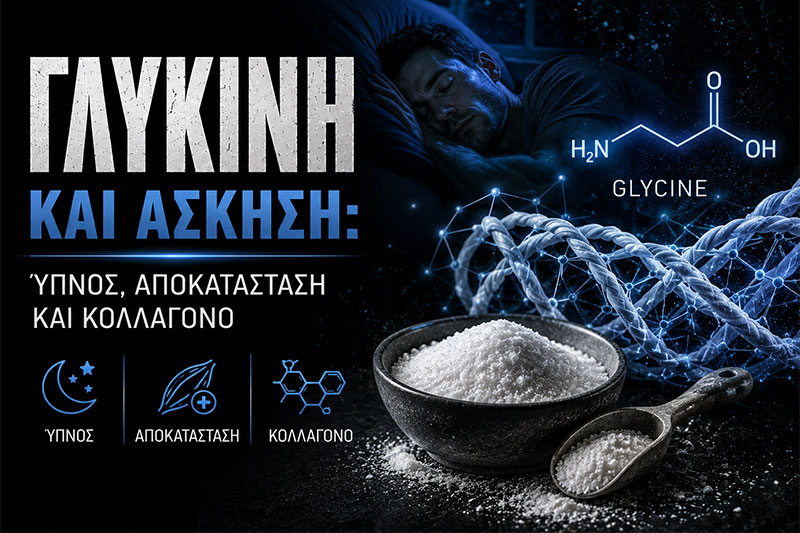 Glycine is a non-essential amino acid produced by the human body. It participates in protein synthesis and is a structural component of collagen, while also contributing to the production of glutathione and creatine. Interest in glycine for exercise primarily concerns sleep quality, recovery and connective-tissue maintenance. Direct evidence for increased strength, muscle mass or athletic performance, however, remains limited. Glycine and Sleep QualityAdequate sleep supports recovery, neuromuscular function and the ability to maintain training performance. In a small crossover study involving 11 participants with unsatisfactory sleep, 3 g of glycine before bedtime was associated with shorter sleep-onset latency, earlier slow-wave sleep and improved subjective sleep quality. Sleep architecture was not significantly altered, but the small sample limits the certainty of the results. Yamadera et al., 2007 In another small study, seven men restricted their usual sleep duration by 25% for three nights. Taking 3 g of glycine before bed was associated with improvements in selected measures of fatigue and psychomotor vigilance. Results were not consistent across every day and outcome. Bannai et al., 2012 Glycine therefore shows potential in relation to sleep, but larger independent clinical trials are required. Muscle Recovery and FatigueThe proposed relationship between glycine and exercise recovery is mainly based on:
Despite these plausible mechanisms, there is insufficient research in athletes demonstrating that isolated glycine supplementation reduces muscle soreness, accelerates recovery or prevents post-exercise performance decline. Studies using glycine in combination with other amino acids or compounds cannot attribute their findings to glycine alone. Glycine and Collagen SynthesisGlycine represents approximately one-third of the amino acids found in collagen and is required for its characteristic triple-helix structure. This creates potential relevance for tendons, ligaments, cartilage and other connective tissues. In a small study involving eight men, vitamin C-enriched gelatin consumed before brief exercise increased circulating glycine and other amino acids, as well as a marker of collagen synthesis. However, the intervention used gelatin with vitamin C rather than isolated glycine and did not directly measure injury prevention. Shaw et al., 2017 A 2024 study involving 25 exercising men found that collagen peptides did not further increase myofibrillar or connective-tissue protein synthesis during one week of intense resistance training. Kirmse et al., 2024 Glycine’s structural role in collagen is well established, but this does not prove that isolated supplementation automatically increases collagen synthesis or prevents injuries. Strength and Athletic PerformanceThere is currently no strong clinical evidence that glycine alone improves:
Any potential performance effect is more likely to be indirect, through sleep and recovery, rather than a confirmed direct ergogenic action. Intake and SafetyMost human sleep studies have used 3 g of glycine approximately 30–60 minutes before bedtime. This represents a research protocol rather than a universal recommendation. Glycine was generally well tolerated in small, short-term studies. Long-term evidence in athletic populations remains limited. Individuals taking medication or managing a health condition should seek personalised advice from an appropriate healthcare professional. ConclusionGlycine is an important amino acid involved in collagen, glutathione and other metabolic processes. Small studies indicate possible improvements in selected measures of sleep quality and daytime fatigue. There is not yet sufficient evidence that isolated glycine supplementation directly increases strength, muscle growth or athletic performance. Its most plausible application concerns sleep support, without replacing adequate nutrition, structured training and sufficient rest. FAQCan glycine improve sleep?Small studies suggest possible improvements in subjective sleep quality and sleep onset. Larger independent trials are still required. Does glycine increase muscle mass?There is insufficient evidence that glycine alone meaningfully stimulates muscle hypertrophy. Can it improve post-workout recovery?It may indirectly support recovery through sleep, but it has not been proven to directly reduce muscle soreness or recovery time. Does glycine support tendons and joints?Glycine is a major component of collagen. Isolated supplementation, however, has not been shown to prevent injuries or treat tendon and joint disorders. When were 3 g of glycine used in research?Sleep studies generally administered 3 g approximately 30–60 minutes before bedtime. This is not an individual medical recommendation. Scientific References
|

Best supplements store
CHOOSE CATEGORY
CATEGORIES










(c) katerelosfitness.gr - All rights reserved - By: Hyper Center -