


 0
0




L‑Glutamine and Muscle Recovery: Does It Work?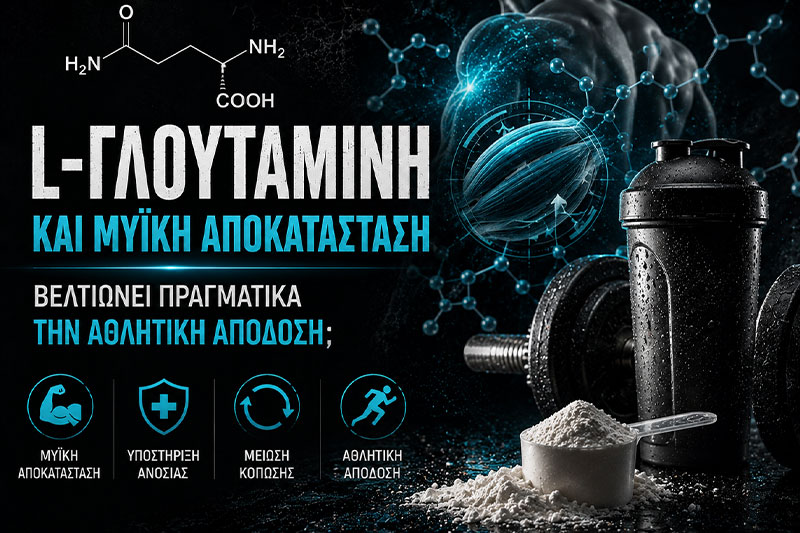 L‑glutamine has not been shown to consistently increase muscle mass, strength or athletic performance in healthy active adults. Some small clinical studies suggest that it may reduce muscle soreness or strength loss after eccentric exercise, but the overall evidence remains mixed. Why is glutamine associated with muscle recovery?Glutamine is present at high concentrations in skeletal muscle and participates in nitrogen transport, nucleotide synthesis and cellular metabolism. Prolonged or particularly demanding exercise may temporarily reduce plasma glutamine concentrations. These observations led to the hypothesis that L‑glutamine supplementation might:
A plausible biological mechanism, however, does not prove a meaningful improvement in performance. Does L‑glutamine increase muscle mass and strength?Available evidence does not support the claim that L‑glutamine independently increases muscle mass or strength in healthy active adults. In a double-blind, randomised study, young adults completed six weeks of resistance training while receiving either glutamine or a placebo. Both groups improved strength and lean tissue mass, with no significant differences between them. The researchers concluded that glutamine provided no additional benefit for muscle performance, body composition or muscle protein breakdown.1 Similarly, a systematic review and meta-analysis of clinical trials did not establish consistent improvements in athletic performance or body composition.2 Can it reduce muscle soreness?Some positive but limited evidence is available. A study investigating recovery after eccentric knee-extension exercise reported that L‑glutamine attenuated strength loss and reduced perceived muscle soreness during the days following exercise.3 This finding does not establish that the same effect occurs:
Reduced muscle soreness does not necessarily indicate greater muscle growth or improved competitive performance. Does L‑glutamine replenish muscle glycogen?Glutamine has also been investigated for its potential effect on post-exercise carbohydrate storage. In a small study, adding glutamine to a glucose solution increased whole-body non-oxidative glucose disposal. However, muscle glycogen storage rates were not significantly different between trials. The researchers suggested that the additional carbohydrate storage probably occurred primarily in the liver rather than skeletal muscle.4 These findings do not demonstrate that glutamine is more effective than adequate carbohydrate intake for post-exercise recovery. Does it affect fatigue and endurance?Some studies have reported changes in fatigue-related markers, ammonia metabolism or energy availability. Reviews, however, highlight substantial differences between exercise protocols, sports and participant populations.5 Current evidence is insufficient to classify L‑glutamine as a direct ergogenic aid with reliable effects on strength or endurance performance. Why do study results differ?Differences between studies may be associated with:
A considerable proportion of orally consumed glutamine is also used by the intestine and other tissues before reaching the systemic circulation. This may limit its direct availability to skeletal muscle.6 What matters most for recovery?For most healthy active adults, the main recovery factors remain:
L‑glutamine should not be considered a replacement for these fundamentals. ConclusionL‑glutamine has important metabolic functions, but this does not mean that supplementation automatically promotes muscle growth or athletic performance. Current evidence does not demonstrate consistent benefits for strength, lean mass or long-term performance in healthy active adults. Limited evidence suggests that it may reduce soreness or strength loss after specific eccentric exercise protocols, but larger and better-designed studies are required. Frequently Asked Questions — FAQDoes L‑glutamine support muscle recovery?It may influence certain recovery markers, but the overall evidence is not sufficiently consistent to support a general recommendation. Does it reduce post-exercise muscle soreness?Small studies have reported a possible reduction in delayed-onset muscle soreness, but this effect has not been confirmed across all exercise types. Does L‑glutamine increase muscle mass?It has not been shown to significantly increase muscle mass in healthy active adults who consume adequate protein and energy. Does it improve strength?Long-term resistance-training studies have not demonstrated a consistent additional strength benefit compared with placebo. Should it be taken before or after exercise?No universally superior timing strategy has been established. Timing does not appear to be the main factor determining its effectiveness. Scientific bibliography
|

Best supplements store
CHOOSE CATEGORY
CATEGORIES









(c) katerelosfitness.gr - All rights reserved - By: Hyper Center -