


 0
0










Taurine Dosage, Safety, Side Effects and Precautions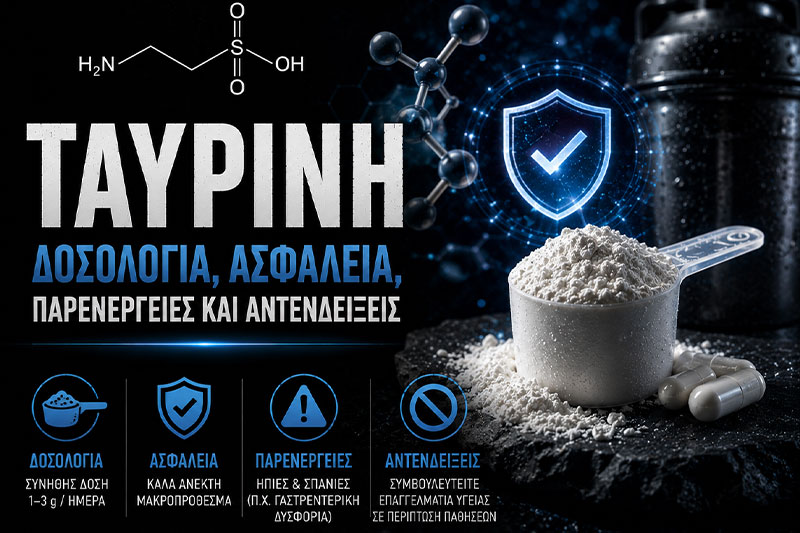 There is no single official taurine dosage suitable for everyone. Human studies have used different amounts often from less than 1 to 6g depending on the population, outcome and duration. This does not make that entire range a recommendation for unsupervised use. A 2008 risk assessment identified 3 g/day of supplemental taurine as an Observed Safe Level (OSL) for healthy adults. An OSL is an intake at which the available evidence strongly supports an absence of adverse effects; it is not a recommended daily dose or an official tolerable upper intake level. Safety at higher intakes or over very long periods has not been established with the same confidence. Is there an official daily taurine dose?No recommended daily intake has been established for supplemental taurine across the general population. Taurine’s natural presence in the body and in foods does not automatically make a supplemental amount necessary or optimal. Research doses are selected for specific protocols. For example, a sports review included trials of taurine as a single ingredient at amounts ranging from less than 1 to 6 g, administered acutely or for short periods. The findings were mixed and do not support one universal dosing rule.
Important: A research dose describes what investigators tested. It is not individualized medical or nutritional advice. What does the evidence say about safety?The overall clinical picture is reasonably reassuring for short-term use of isolated taurine at studied amounts. A 2024 meta-analysis of 20 randomized clinical trials involving 808 participants found no statistically significant increase in adverse events compared with control groups. This does not prove absolute safety for every person, every formulation or unlimited use. Trial findings apply within the studied population, amount, product form and follow-up period. Evidence remains more limited for very high intakes and continuous use lasting many years. Potential taurine side effectsIsolated taurine appears generally well tolerated. As with any supplement, nonspecific symptoms such as gastrointestinal discomfort or headache may occur. Their exact frequency and causal relationship specifically to taurine have not been adequately quantified. Severe or persistent symptoms, an allergic reaction, marked dizziness, fainting or a substantial blood-pressure change warrant stopping the supplement and seeking professional assessment. Every ingredient in the formulation—not taurine alone—should also be considered. Taurine and medication interactionsClinically important interactions between isolated taurine and specific medicines have not been consistently established. Lack of strong evidence, however, is not a guarantee that no interaction can occur. Meta-analyses have associated taurine supplementation with small reductions in systolic and diastolic blood pressure. People taking antihypertensive medication should therefore consult a physician or pharmacist because an additive effect is theoretically possible. This is a pharmacodynamic precaution, not a proven universal contraindication. Medication should never be replaced, reduced or discontinued in favour of a supplement without the prescribing clinician’s direction. Who needs particular caution?Pregnancy and breastfeedingEvidence is insufficient to establish the safety of supplemental taurine during pregnancy or breastfeeding. Self-supplementation is therefore not appropriate unless specifically advised by an obstetrician or another treating clinician. Children and adolescentsAdult doses and adult safety findings cannot automatically be transferred to minors. Taurine supplementation in children or adolescents should be considered only under paediatric or specialist medical guidance. Chronic medical conditionsPeople with kidney, liver or cardiovascular disease, blood-pressure disorders or complex medication regimens need individualized assessment. This does not mean taurine is necessarily contraindicated in every such case; it means that healthy-adult data are insufficient to justify unsupervised use. Isolated taurine and energy drinks are not equivalentTaurine is not caffeine and is not classified as a stimulant. An energy drink, however, may contain caffeine, sugars and other bioactive ingredients. A symptom occurring after an energy drink cannot automatically be attributed to taurine, and safety data for isolated taurine are not sufficient to assess the entire beverage. Human evidence on taurine–caffeine interactions remains limited. It is not scientifically sound to assume either that every combination is dangerous or that taurine completely neutralizes caffeine-related adverse effects. Principles for responsible use
ConclusionTaurine is generally well tolerated at the amounts and durations studied in humans. Three grams per day has been described as an OSL for healthy adults—not as an ideal dose or an official upper limit. There is no single dosage appropriate for everyone, and certainty decreases for higher intakes, very long-term use and special populations. Responsible decisions should reflect the label, the complete formulation and, where relevant, individualized professional guidance. Frequently asked questions (FAQ)What is the correct taurine dosage?There is no universal official dose. Studies have used different amounts for different purposes, so a research dose should not be converted into a personal recommendation. Is 3 g of taurine per day safe?A risk assessment identified 3 g/day as an OSL for healthy adults. This reflects strong evidence of an absence of adverse effects in the available data, not a guarantee for everyone or a recommended daily dose. Can I take taurine every day long term?The answer depends on amount, health status, medication and duration. Evidence for very long-term use and high intakes is less certain, so professional advice is appropriate. What are the most common side effects?Isolated taurine is generally well tolerated. Nonspecific effects such as gastrointestinal discomfort or headache may occur, but taurine-specific frequencies are not well established. Can taurine be combined with caffeine?Human interaction evidence is limited. Caffeine and the full formulation of an energy drink should be assessed separately from isolated taurine. Who should consult a clinician before taking taurine?Pregnant or breastfeeding people, minors, those with chronic conditions and anyone taking medication—particularly antihypertensive drugs—should avoid unsupervised supplementation. References
|

Best supplements store
CHOOSE CATEGORY
CATEGORIES










(c) katerelosfitness.gr - All rights reserved - By: Hyper Center -