


 0
0







Leucine Dosage, Timing, Safety and Side Effects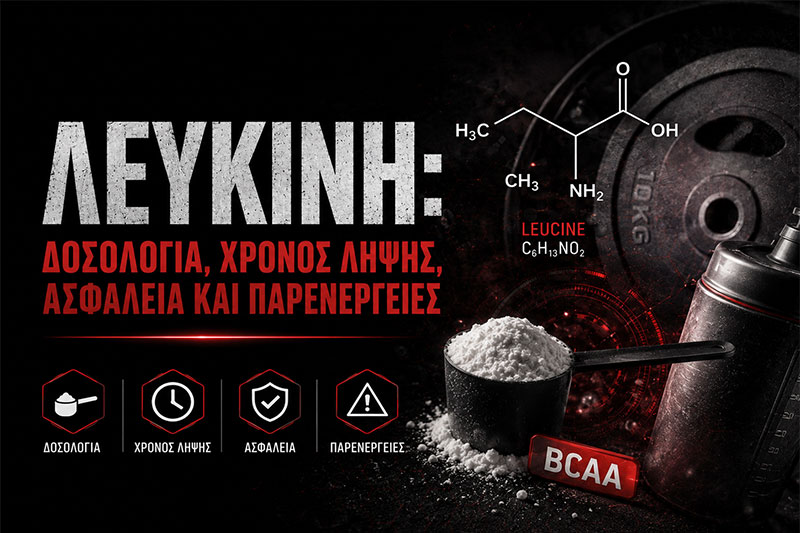 Leucine is an essential branched-chain amino acid (BCAA) involved in the regulation of muscle protein synthesis. Dietary leucine requirements, however, are not the same as a supplement dosage. Requirement standards concern total intake from food and supplements; no universal supplemental dose has been established for athletic performance or muscle growth [1]. Any amount reported in a study must be interpreted within that study's design, including age, body weight, protein intake, training type, intervention duration and meal composition. Which amounts have been studied?
In resistance-trained men who already consumed adequate protein, 10 g of leucine daily for 12 weeks produced no additional strength or hypertrophy benefit compared with placebo [6]. A higher dose therefore does not automatically produce a better outcome. When should leucine be taken: before or after training?There is no strong evidence for one uniquely optimal time to take isolated leucine. Research protocols frequently provide it near exercise or with a meal, protein or essential amino acids. Leucine acts as an anabolic signal, but all essential amino acids are required to build new muscle protein. Taking it within a complete protein-containing meal is therefore biologically more comprehensive than supplying an isolated signal without adequate protein substrates. A meta-analysis directly comparing protein intake before versus after exercise found no important difference in lean body mass [5]. This evidence concerns protein rather than isolated leucine. It nevertheless supports the cautious inference that consistent daily intake matters more than an extremely narrow “anabolic window.” What is the leucine threshold?The leucine threshold is the hypothesis that a minimum increase in available leucine is required to maximally stimulate muscle protein synthesis. It is not a fixed number that applies to every person. A systematic review found that the association between ingested leucine and post-meal muscle protein synthesis was clearer in older adults than in younger adults. No single blood leucine variable consistently predicted the response [4]. Age, protein quality and quantity, exercise and anabolic resistance all affect the context. Safety and potential side effectsIn healthy adults, conventional research amounts are generally well tolerated in the short term. Long-term safety data for high doses remain limited. Nonspecific symptoms such as gastrointestinal discomfort, nausea or headache may occur, although reliable leucine-specific frequencies have not been established. In small, acute dose-escalation studies, intakes above 500–550 mg/kg/day were associated with increased blood ammonia and signs that leucine-handling capacity was approaching saturation [2,3]. These findings provide no justification for consuming such high amounts. Is there an upper limit?National health authorities generally have not established an official tolerable upper intake level for isolated leucine, largely because adequate long-term dose-response trials are lacking [1]. A 2023 review proposed research-derived estimates of approximately 35 g/day for younger adults and 30 g/day for older adults [1]. These figures:
Who needs medical guidance?Supplemental leucine should not be used without individualized professional assessment by:
In maple syrup urine disease (MSUD), BCAA metabolism is impaired and leucine can accumulate to toxic concentrations. Supplemental leucine is inappropriate unless it forms part of a specialist metabolic treatment plan [7]. The absence of a documented interaction with a particular drug does not prove that a combination is safe. Anyone with a chronic condition or prescribed medication should consult a physician or pharmacist. Responsible practical useTotal leucine exposure from foods, protein supplements, BCAA formulas and EAA products should be considered before use. Combining several products can unintentionally produce a high intake. Adequate complete protein, a balanced diet, progressive training and recovery remain the priorities. ConclusionThe scientifically accurate answer to “what is the correct leucine dosage?” is not one universal number. Studies use different amounts for different purposes, and extra leucine does not necessarily improve results when complete protein intake is already adequate. Timing appears less important than overall daily nutrition, while high-dose safety estimates should never be confused with effective or recommended doses. Frequently Asked Questions (FAQ)1. How much leucine should I take per day?There is no official supplemental dose suitable for everyone. Amounts such as 5–10 g/day reported in some trials are research protocols, not general recommendations. 2. Is leucine better before or after a workout?No uniquely optimal time has been established. Adequate daily complete protein and consistent nutrition are likely more important than a narrow timing window. 3. Can I take leucine with protein?Studies frequently provide leucine with protein or essential amino acids. Complete protein supplies all essential building blocks needed for muscle protein synthesis. 4. Can leucine cause side effects?Conventional research amounts are generally well tolerated by healthy adults, although nonspecific gastrointestinal symptoms may occur. Very high intakes have been associated with increased blood ammonia. 5. Is 30–35 g of leucine a safe daily dose?Not as a practical recommendation. These are research-derived estimates of a possible upper boundary, based mainly on small acute studies—not a suggested intake or supplementation target. 6. Who should avoid leucine without medical advice?Pregnant or breastfeeding individuals, minors, people with kidney, liver or metabolic disease, and those taking medication need professional assessment. In MSUD, leucine intake must be managed exclusively by a specialist metabolic team. References
|

Best supplements store
CHOOSE CATEGORY
CATEGORIES










(c) katerelosfitness.gr - All rights reserved - By: Hyper Center -