


 0
0







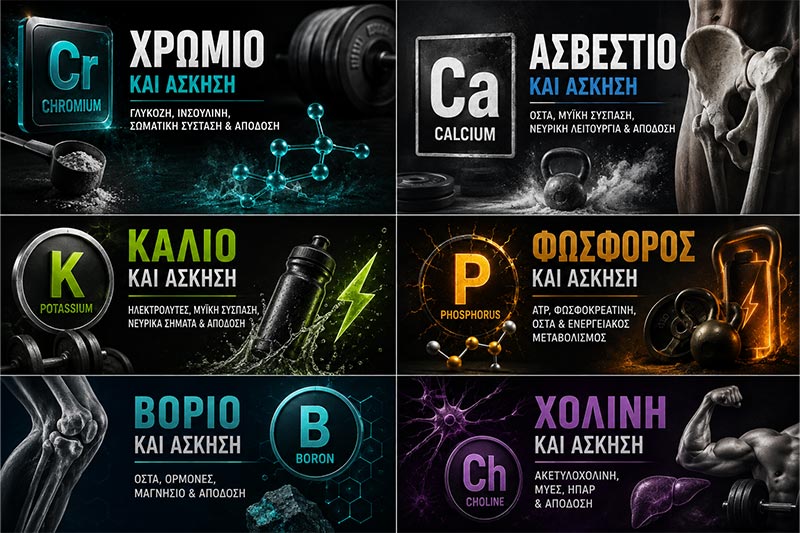 Choline is an essential nutrient involved in the synthesis of cell-membrane phospholipids, lipid transport and metabolism, and the production of the neurotransmitter acetylcholine. Humans can produce some choline in the liver, but endogenous synthesis is not sufficient to meet total requirements. For athletes, choline is particularly interesting because acetylcholine participates in muscle control and nervous-system function. However, its essential biological role does not mean that additional choline supplementation automatically improves exercise performance. Choline and AcetylcholineCholine is required for the synthesis of acetylcholine, an important neurotransmitter involved in brain and nervous-system functions as well as muscle control. This is one reason choline is commonly included in pre-workout formulations, including products containing choline bitartrate alongside caffeine, citrulline, creatine and beta-alanine. Its presence in a pre-workout formula, however, does not by itself demonstrate a performance-enhancing effect. Does Prolonged Exercise Reduce Choline Levels?Some older studies found that prolonged exercise can reduce plasma choline concentrations. In triathletes, two hours of cycling reduced average plasma choline concentrations by approximately 16.9%, whereas lecithin ingestion before exercise helped maintain concentrations closer to baseline. This finding led to the hypothesis that choline availability might influence fatigue during prolonged endurance exercise. Does Choline Improve Endurance?Controlled research has not demonstrated a consistent ergogenic effect. In a 2000 study, a choline-containing beverage substantially increased plasma choline following a run-to-exhaustion test, but did not improve any physical-performance outcome compared with placebo. The broader experimental literature in cyclists and runners has similarly failed to demonstrate consistent endurance improvements in people with normal choline status. Choline should therefore not be regarded as an established endurance-enhancing supplement. Choline and Neuromuscular CoordinationCholine has also been studied in relation to movement coordination. In a placebo-controlled trial involving 28 healthy adults, an acute dose of choline bitartrate improved accuracy during a visuomotor task but also slowed reaction times. The researchers interpreted this as a shift in the speed–accuracy trade-off toward greater accuracy. This is an interesting finding, but it does not establish that choline increases strength, sprint speed or real-world athletic performance. Choline and Liver FunctionCholine also has a major role in liver function. It is required for phosphatidylcholine synthesis and the normal transport of lipids from the liver. Significant choline deficiency can lead to liver dysfunction, accumulation of liver fat and muscle damage. Choline is therefore also used in products aimed at supporting normal liver function. How Much Choline Does an Adult Need?EFSA has established an Adequate Intake of 400 mg choline per day for adults. The AI is 480 mg/day during pregnancy and 520 mg/day during lactation. In the United States, the Adequate Intakes are:
No separate official daily choline requirement has been established specifically for athletes. Which Foods Contain Choline?Good dietary sources include:
One large hard-boiled egg provides approximately 147 mg choline, while 3 ounces of cooked beef liver provides approximately 356 mg. Choline Bitartrate, Phosphatidylcholine or Lecithin?Common supplemental forms include:
NIH notes that comparative studies are insufficient to determine whether one of these forms has clearly superior overall bioavailability. Choline bitartrate is frequently used in sports formulations such as Applied Nutrition ABE Pre-Workout. What Happens in Choline Deficiency?Clinical choline deficiency is relatively uncommon in healthy adults, even though many individuals may consume less than established Adequate Intake values. Significant deficiency can cause:
Individual requirements can also vary according to genetic factors, sex and the availability of other methyl donors such as folate. Be Careful With Very High DosesThe U.S. Food and Nutrition Board established a Tolerable Upper Intake Level of 3,500 mg choline per day for adults, including intake from food and supplements. Very high choline intake can cause:
More choline therefore does not necessarily mean better neuromuscular function. ConclusionCholine is an essential nutrient involved in acetylcholine production, cell-membrane structure, lipid metabolism and normal liver function. Prolonged exercise can reduce plasma choline under some conditions, but supplementation has not consistently improved endurance or overall physical performance. For athletes, the priority should therefore be adequate daily intake rather than high-dose supplementation in pursuit of an unproven ergogenic effect. FAQDoes choline increase strength?There is insufficient evidence that additional choline increases muscular strength in individuals with normal choline status. Does choline improve endurance?Although prolonged exercise can reduce plasma choline, controlled trials have not demonstrated consistent improvements in exercise performance from supplementation. What is the relationship between choline and acetylcholine?Choline is a precursor used to synthesize acetylcholine, a neurotransmitter involved in muscle control and nervous-system function. How much choline does an adult need?EFSA has established an Adequate Intake of 400 mg/day for adults. References
|

Best supplements store
CHOOSE CATEGORY
CATEGORIES










(c) katerelosfitness.gr - All rights reserved - By: Hyper Center -