0
0





ΕΠΙΛΟΓΕΣ Latest entries in category Creatine |
 |
|

Best supplements store
CHOOSE CATEGORY
CATEGORIES












INTERESTING ARTICLES
-
Creatine While Cutting: What to Expect
Can you use creatine during fat loss? Learn about its role in training and how to interpret changes in body weight during a cutting phase.
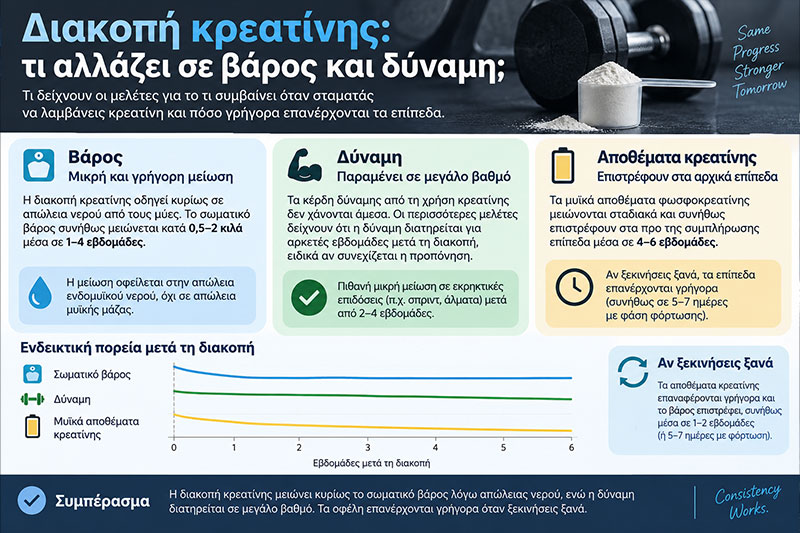
Stopping Creatine: What Happens to Weight and Strength?
What happens when you stop taking creatine? Learn how muscle stores change and why a drop in body weight does not necessarily mean muscle loss.
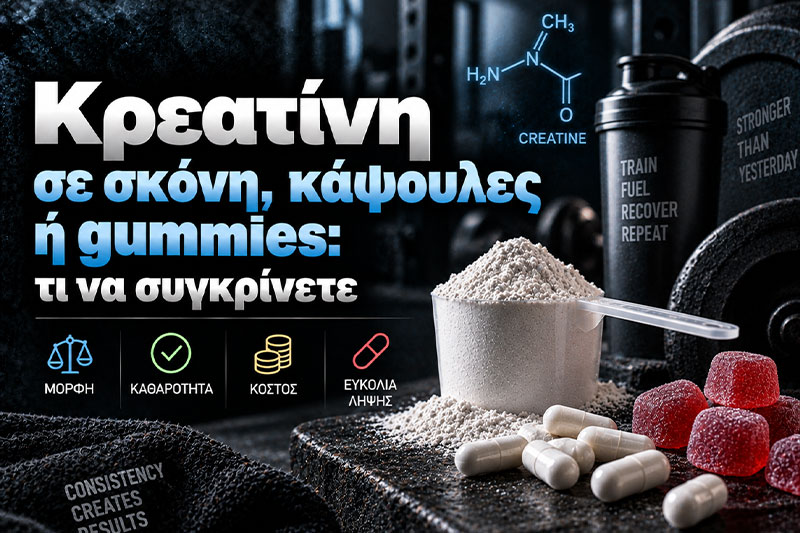
Creatine Powder, Capsules or Gummies: What to Compare
Compare creatine powder, capsules and gummies by the amount per serving, ingredients, convenience and cost for an equivalent quantity.
Creatine and Protein in the Same Shake: Can You Mix Them?
Can you add creatine to a protein shake? Learn what the research shows and how to calculate protein and creatine amounts correctly.
Creatine and Coffee: Can You Combine Them?
Does coffee affect creatine? Explore the research on caffeine, combined supplementation, digestive tolerance and practical everyday use.
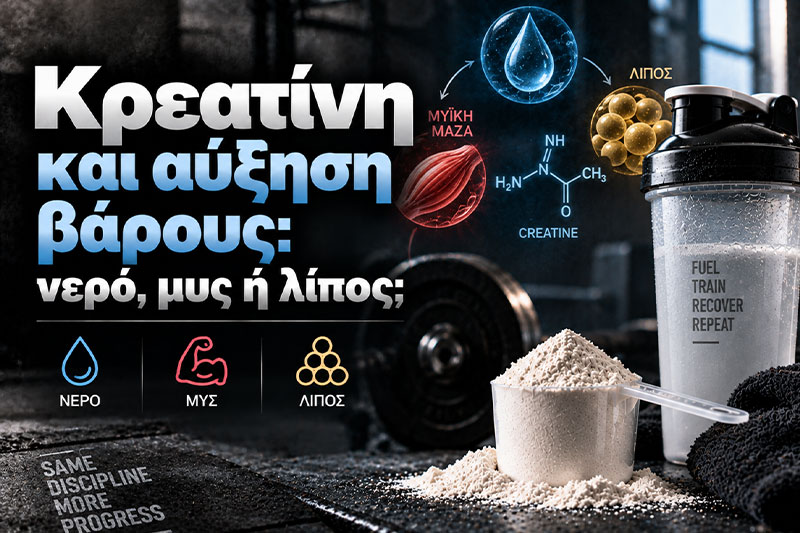
Creatine and Weight Gain: Water, Muscle or Fat?
Has your weight increased after starting creatine? Learn how changes in body water, fat-free mass and total weight should be interpreted.
Creatine on Rest Days: Why Consistency Matters
Should creatine be taken on non-training days? Learn why consistent intake matters and how rest days affect the amount and timing of supplementation.
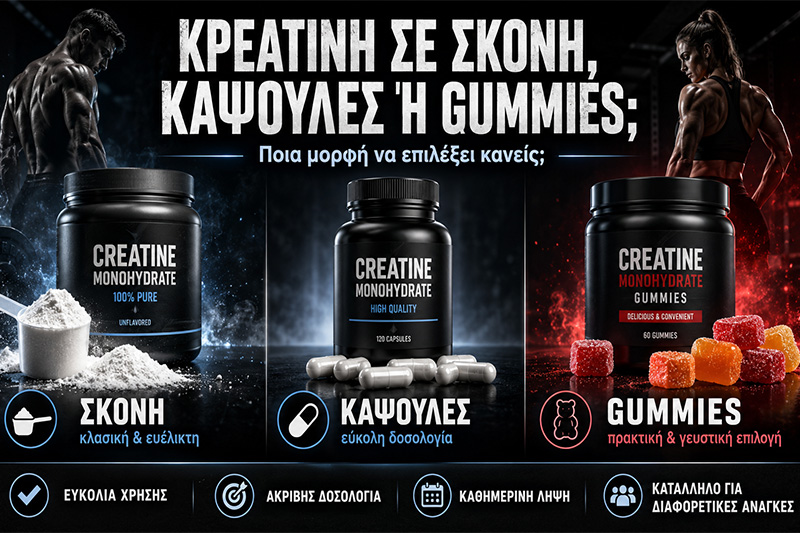
Creatine Powder, Capsules or Gummies: Which Form Should You Choose?
Creatine is now available in several formats, including powder, capsules, tablets, effervescent products and gummies. This variety may create the impression that every format produces a different physiological effect.
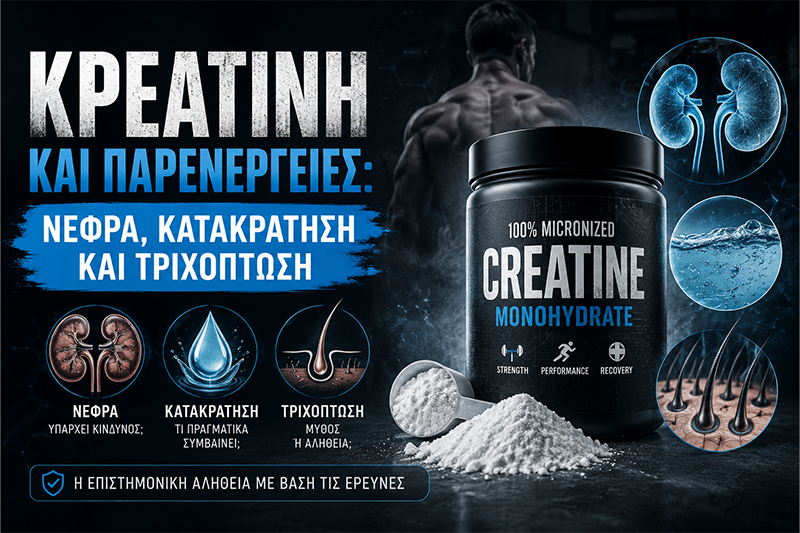
Creatine and Side Effects: Kidneys, Retention, and Hair Loss
Does Creatine Cause Kidney Problems, Retention, or Hair Loss? What Scientific Studies Show About Its Safety. Creatine and Side Effects: What the Science Shows Creatine monohydrate is widely used to support performance and resistance training. Despite a large number of scientific studies, it is still associated with concerns about kidneys, dehydration, fluid retention, and hair loss. Some of these concerns stem from misinterpretation of laboratory tests or from isolated studies that did not directly examine the effect they were reported to have.
Creatine: Dosage, Loading, and When to Take It
How much creatine is needed daily, when should it be taken, and whether a loading phase or discontinuation of use is necessary.
Creatine Monohydrate: What It Is and What Are Its Benefits
What is creatine monohydrate, how does it work, and what are its scientifically proven benefits for strength and performance? Creatine monohydrate is one of the most studied nutritional supplements in the field of sports nutrition. It is mainly used by people who perform resistance training, explosive movements, or repeated high-intensity efforts. Its effectiveness is not based on an immediate stimulating effect, as is the case with caffeine. Creatine works by gradually increasing creatine and phosphocreatine stores in the muscles, supporting faster cellular energy synthesis.
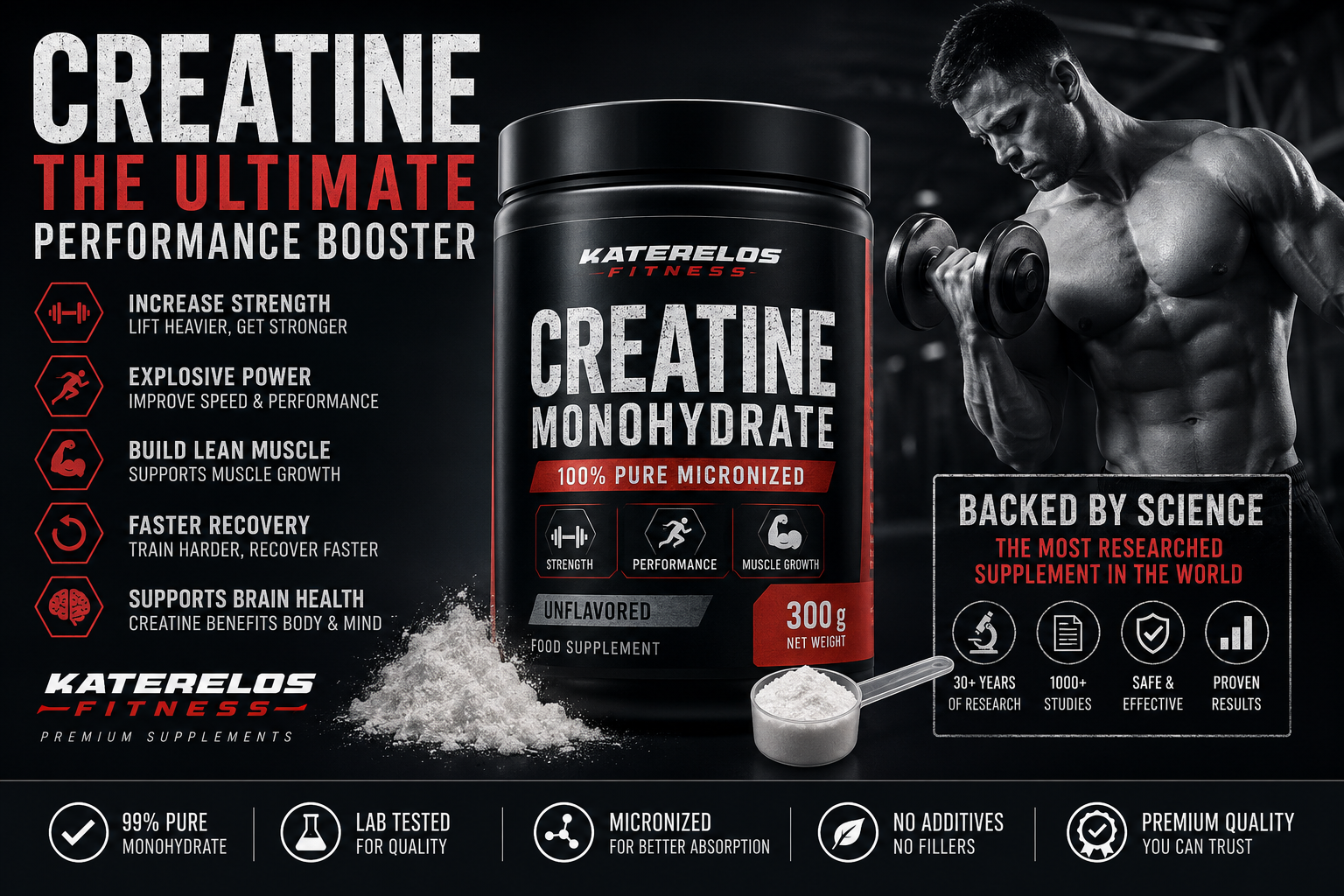
Creatine: The Most Scientifically Proven Supplement for Strength, Performance, and Muscle Growth
Creatine is one of the most extensively researched and effective dietary supplements available today. Over the past three decades, hundreds of scientific studies have consistently demonstrated its ability to improve strength, power output, high-intensity exercise performance, and lean muscle mass when combined with proper resistance training and nutrition